Commercial vehicle tire care has a direct impact on how safely your trucks run, how much fuel they burn and how often they sit in the shop. A tire running low on air, a worn steer tire or a sidewall bulge missed during inspection can quickly turn into a roadside breakdown or a costly blowout. In this guide, SONNY BOSCO shares practical steps for tire inspection, pressure checks, tread wear and preventive maintenance that drivers and fleet managers can apply every day.
Why Is Commercial Vehicle Tire Care Important?

Tires are one of the largest recurring costs for any fleet and the only part of the truck that touches the road. Consistent commercial truck tire care delivers clear benefits:
- Fewer blowouts: Correct pressure keeps tires cooler and lowers the risk of heat related failures;
- Early damage detection: Routine checks catch cuts, cracks and bulges before they fail at highway speed;
- Longer tread life: Proper pressure, alignment and load help the tread wear evenly;
- Better fuel efficiency: Well inflated tires reduce rolling resistance and fuel use;
- Less fleet downtime: Fewer roadside breakdowns help reduce fleet downtime and late deliveries;
- Lower tire cost per mile: Healthy tires run more miles and keep casings ready for retreading.
How to Inspect Commercial Vehicle Tires Before Every Trip
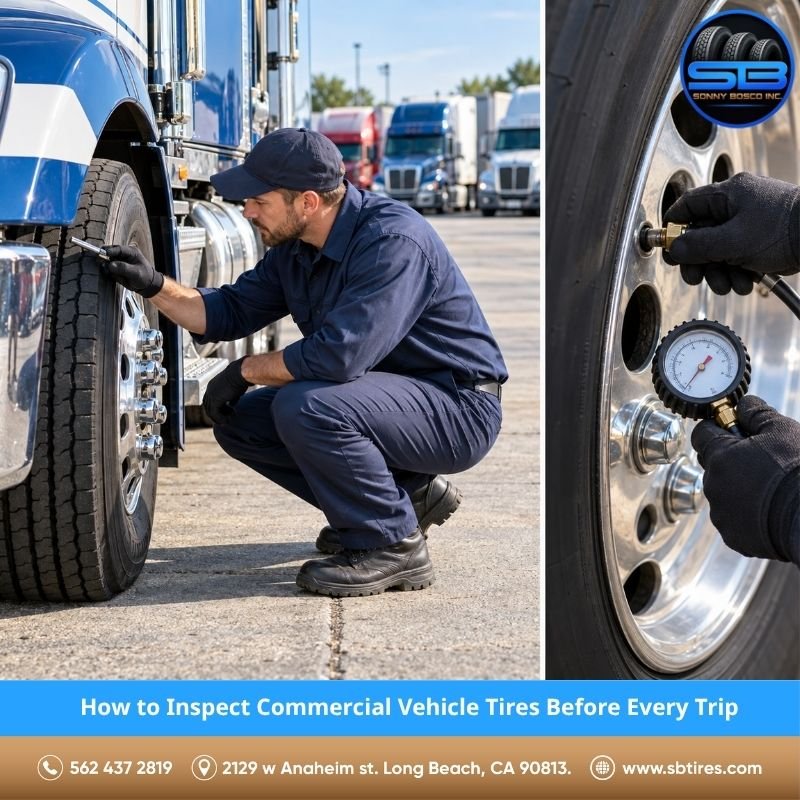
A pre-trip tire inspection takes only a few minutes and is required as part of making sure the truck is safe to drive. For a full walkthrough, see our commercial tire inspection guide; the key steps are:
- Check cold pressure: Use a calibrated gauge before driving, since a thump test cannot detect moderate underinflation;
- Listen for leaks: Note any hissing sound or tire that looks lower than the others;
- Measure tread depth: Use a tread depth gauge in the major grooves, especially on steer tires;
- Inspect sidewalls: Look for cuts, cracks, bulges and exposed cords, and report any bulge before moving;
- Check valves and wheels: Confirm valve caps are in place and look for cracked wheels or loose lug nuts;
- Examine dual tires: Keep dual pairs matched in pressure and size, with no debris wedged between them.
Proper Tire Pressure for Commercial Trucks
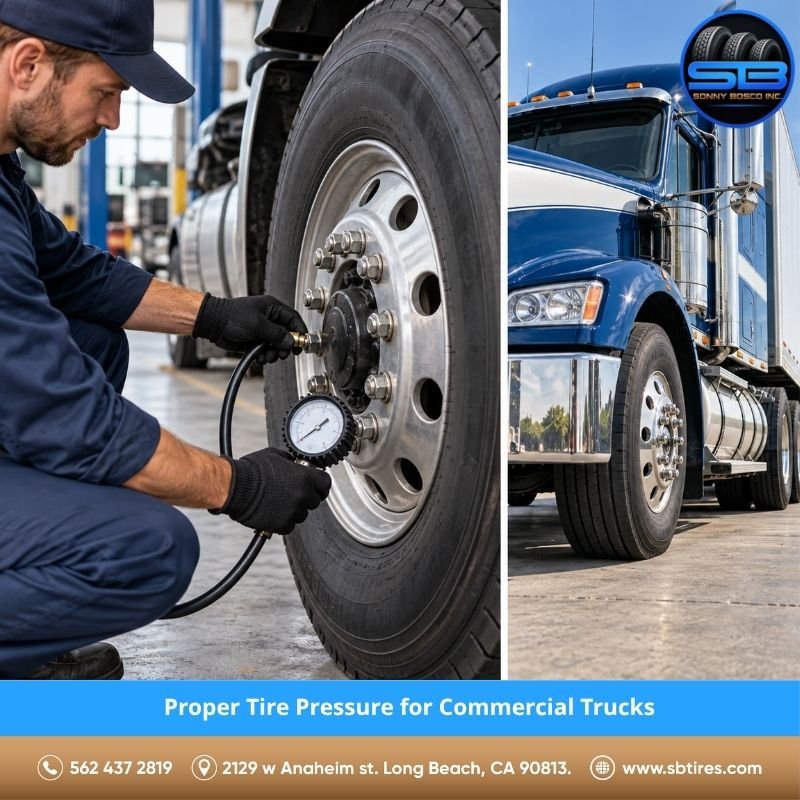
There is no single PSI number that fits every commercial truck, so proper tire pressure for commercial trucks must be set for each application. Our truck tire pressure guide covers charts in detail; the basics are:
- Use load and inflation tables: Tire manufacturers list the required pressure for each tire size, load and single or dual fitment;
- Know your axle load: Set pressure based on the real weight each axle carries;
- Avoid underinflation: Low pressure builds heat, wears both shoulders and raises the risk of casing failure;
- Avoid overinflation: Excess pressure shrinks the contact patch, wears the center and makes tires easier to cut;
- Treat 20% low as flat: A tire running 20% or more below its recommended pressure should be removed, inspected and reinflated only in a safety cage;
- Use TPMS and logs: Pressure monitoring systems and recorded readings help catch slow leaks early.
Commercial Truck Tire Tread Depth and Wear Patterns

Tread depth shows how much safe life a tire has left, while wear patterns reveal problems with the truck itself. Under FMCSA regulations (49 CFR 393.75), the main points are:
- Steer tires: At least 4/32 inch on a major tread groove for the front wheels of the power unit;
- All other tires: At least 2/32 inch on a major tread groove for drive and trailer positions;
- Center or shoulder wear: Center wear often signals overinflation, while wear on both shoulders points to underinflation or overloading;
- Feathering or one-sided wear: These patterns usually indicate toe, camber or axle alignment problems;
- Cupping: Scalloped dips often point to worn shocks, suspension issues or wheel imbalance;
- When to replace: Pull tires at the tread limit or when you find sidewall damage, separation, bulges or exposed cords.
Best Commercial Tire Maintenance Practices to Extend Tire Life
Knowing how to extend commercial tire life comes down to steady preventive habits. The most effective practices include:
- Rotate based on wear: Follow the tire maker’s guidance for truck tire rotation and move tires when wear becomes uneven;
- Respect tire positions: Only move steer, drive and trailer tires to positions they are designed for;
- Check alignment: Inspect after suspension repairs, hard impacts or any sign of feathering;
- Stay within load limits: Never exceed tire, axle or gross vehicle weight ratings;
- Distribute and secure cargo: Even, well secured loads keep any single tire from being overloaded;
- Keep tires clean and stored well: Remove debris and oil, and store spares in a cool, dry place away from sunlight and ozone.
When to Repair, Retread or Replace Commercial Truck Tires
Not every damaged tire needs to be replaced. The right choice depends on the damage location, its severity and the condition of the casing:
| Option | Best For | Key Condition | Main Benefit |
| Repair | Small punctures in the tread area | Injury within manufacturer limits, no internal damage | Fastest, lowest cost return to service |
| Retread | Worn tires with a healthy casing | Casing passes inspection for age, damage and prior repairs | Lower cost per mile than a new tire |
| Replace | Severe or structural damage | Sidewall damage, separation or rejected casing | Restores full safety and performance |
Commercial Vehicle Tire Maintenance Schedule and Checklist
A clear schedule turns tire care into a routine. Use these tasks as the base for your commercial truck tire maintenance checklist:
- Daily: Do a pre-trip inspection for damage, low tires, leaks and loose lug nuts;
- Weekly: Check cold pressure with a calibrated gauge and review TPMS alerts;
- Periodic: Measure tread depth, check alignment and review wear history;
- Assign clear roles: Drivers handle visual checks, while technicians handle measurements and repairs;
- Record every check: Write results into a shared log so issues are not missed between shifts.
The table below works as a reference fleet tire maintenance checklist:
| Inspection Item | Frequency | Responsible Person | What to Check | Corrective Action |
| Tire pressure | Fleet schedule | Driver / Technician | Cold PSI, leaks | Adjust or inspect |
| Tread depth | Periodic / As needed | Technician | Tread depth and wear | Evaluate replacement |
| Sidewall condition | Pre-trip | Driver | Cuts, bulges, cracks | Report and inspect |
| Valves and wheels | Pre-trip / Service | Driver / Technician | Damage, leaks, looseness | Refer for service |
| Alignment | As indicated | Technician | Uneven wear, handling | Inspect and correct |
Note: This is a reference schedule. It does not replace required pre-trip inspections, your company’s procedures or the tire and vehicle manufacturer’s guidance.
How to Build an Effective Fleet Tire Maintenance Program
For larger operations, fleet tire management means tracking the performance of the whole fleet, not just single tires. A strong program includes:
- Keep a tire log: Record tire position, pressure, tread depth and inspection date;
- Track each tire: Use the DOT tire identification number to follow repairs, rotations and retreads;
- Note removal reasons: Find out whether failures come from road hazards, maintenance gaps or vehicle problems;
- Measure tire cost per mile: Compare brands, positions and routes by total tire spending per mile;
- Watch downtime and retread rates: A low casing acceptance rate often signals pressure or maintenance issues;
- Plan ahead: Schedule replacements before tires reach their pull point and keep common sizes in stock.
Commercial Truck Tires and Parts at SONNY BOSCO
Good maintenance works best when it starts with a dependable tire. Based in Long Beach, California, SONNY BOSCO is the exclusive partner of DRC in the US, serving trucking companies, fleet operators, distributors and parts buyers:
- Radial and bias tires: Our lineup includes bias tires built for heavy-duty applications, rough terrain and high load capacity;
- Maintenance accessories: Products that support tire care and help extend tire life;
- Quotes and wholesale pricing: Fleets and distributors can request a quote or wholesale price through our website;
- Prepare your details: Share tire size, vehicle application, axle position, load requirements and quantity for faster advice;
- Contact: Hotline: 562 437 2819; Email: Sbvnopt@gmail.com; Website: sbtires.com;
- Address: 2129 W Anaheim St., Long Beach, CA 90813.
Frequently Asked Questions About Commercial Vehicle Tire Care
How Often Should Commercial Vehicle Tires Be Inspected?
Drivers should visually inspect tires before every trip. Tire pressure should be checked with a calibrated gauge at least weekly or according to your fleet schedule, and tread depth, wear patterns and alignment should be reviewed during periodic maintenance.
What Is the Minimum Tread Depth for Commercial Truck Tires?
Under FMCSA rules, steer tires on the power unit need at least 4/32 inch of tread at any point on a major groove. All other tires need at least 2/32 inch. Many fleets replace tires earlier to keep better traction and preserve casings for retreading.
What Is the Correct Tire Pressure for Commercial Trucks?
There is no single correct PSI for all trucks. The right pressure depends on tire size, axle load and whether the tire runs single or dual. Use the tire manufacturer’s load and inflation table and always check pressure when tires are cold.
Can Commercial Truck Tires Be Retreaded?
Yes. Most commercial truck tires can be retreaded if the casing passes inspection for age, damage and previous repairs. Retreads are common on drive and trailer positions, but FMCSA rules do not allow retreaded tires on the front wheels of buses.
How Can Fleet Managers Reduce Tire Maintenance Costs?
Keep tires at the correct pressure, check alignment regularly, rotate tires based on wear and pull tires before casings are damaged. Tracking cost per mile, downtime and retread eligibility also helps you spot problem trucks early and plan purchases ahead.
We hope this guide helps you build a clearer routine for commercial vehicle tire care, from daily pre-trip checks and correct pressure to tread monitoring and planned replacement. Small habits applied consistently keep your trucks safer, lower tire cost per mile and reduce costly downtime across the fleet. When it is time to choose replacement tires for your fleet, visit SONNY BOSCO or call Hotline: 562 437 2819 for product information and a quote.