


Every mile a truck runs depends on what touches the road, which is why choosing the right commercial tires matters as much as choosing the right truck. At SONNY BOSCO, fleet operators, transport companies and distributors can find commercial truck tires, semi-truck tires and heavy-duty options from DRC, with wholesale pricing available for bulk orders. Browse by size, axle position or application below, then request a quote for the models your fleet needs.
Commercial Tires for Sale at SONNY BOSCO
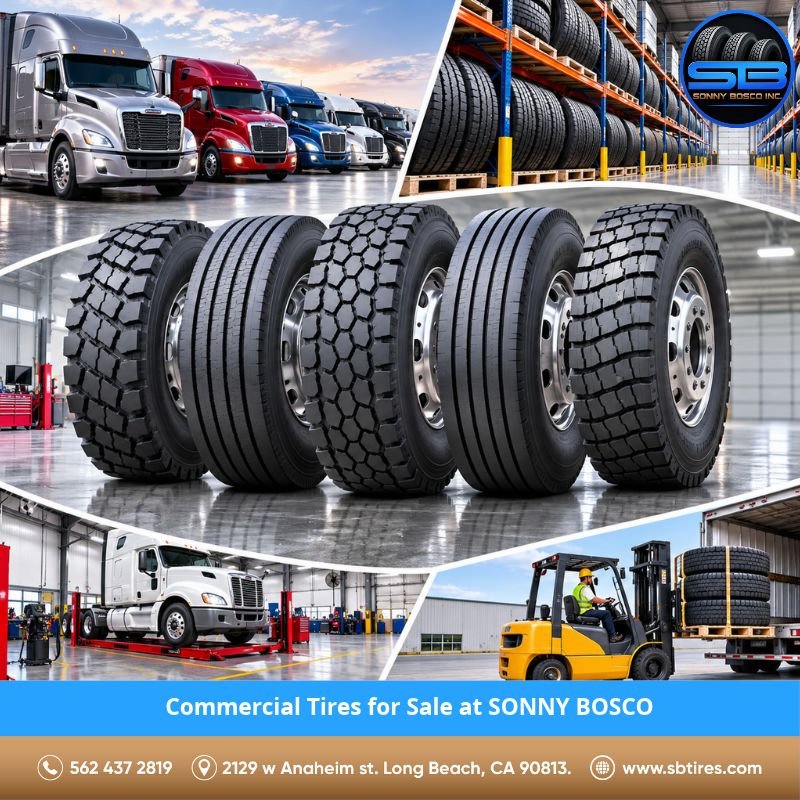
SONNY BOSCO supplies tire lines for commercial trucks, tractor units, trailers and heavy-load applications. Each group below is built for a different type of work, so knowing the differences helps buyers narrow the search quickly.
Commercial Truck Tires
Commercial truck tires are designed for vehicles that move goods every day, from box trucks to regional haulers. Before ordering, buyers should review these key points:
- Main applications: Freight delivery, regional distribution, construction supply and service fleets that run daily routes;
- Construction: Most modern truck tires use radial construction with steel belts for strength and stable tread contact;
- Specs to check: Tire size, load range, load index, speed rating and the tread pattern recommended for each axle.
Heavy-Duty and Semi-Truck Tires
Semi-truck tires and heavy-duty truck tires are designed to carry heavy loads over long distances. These tires are judged by a few practical factors:
- Load capacity: The combined tire load capacity must meet the axle load requirements at the specified inflation pressure;
- Durability: Strong casings and tread compounds help resist heat buildup, cuts and uneven wear on long-haul routes;
- Tire performance: Stable handling, consistent traction and predictable wear matter more than any single headline number.
Actual tread life varies with load, inflation, alignment and route conditions, so buyers should compare tires based on real-world fleet data rather than general claims.
Commercial Trailer Tires
Trailer tires roll freely without steering or driving force, yet they still carry a large share of the load. Choosing trailer tires comes down to the following points:
- Load support: Trailer axles often carry heavy, shifting cargo, so the correct load range is essential;
- Wear resistance: Tread designs for trailers aim to reduce irregular wear caused by scrubbing during tight turns;
- Correct fit: The tire must match the trailer axle configuration, wheel size and single or dual mounting.
Specialty and Bias Tires
Some jobs need a different kind of tire than standard highway radials. SONNY BOSCO carries bias tires from DRC for these applications:
- Cross-ply construction: Layers of cord cross at an angle, creating a stiff, tough sidewall;
- Typical uses: Off-road work, rough terrain, industrial sites and low-speed, high-load operations;
- Difference from radial tires: Bias tires favor sidewall toughness and load handling on rough ground, while radial truck tires are generally better suited to long-distance highway travel and fuel-efficient operation.
Shop Commercial Tires by Tire Position
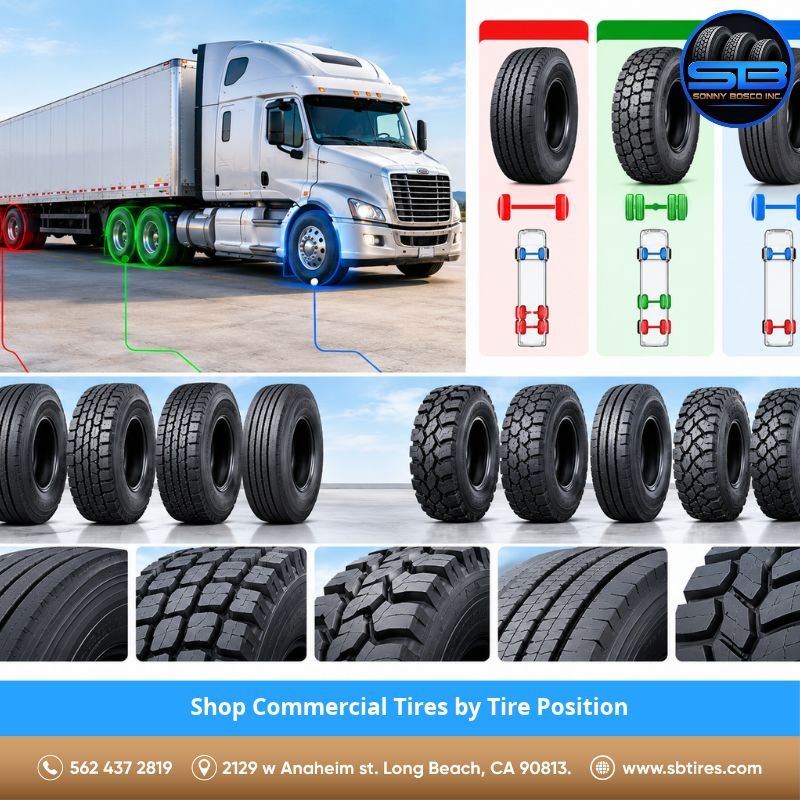
Axle position is one of the first filters when shopping for commercial tires because each position puts different demands on the tread. The categories below help buyers narrow their search by axle position.
Steer Tires
Steer tires sit on the front axle and control the direction of the truck. The main qualities to look for include:
- Handling: Precise steering response, especially at highway speeds and during lane changes;
- Stability: Rib tread patterns help the truck track straight and reduce driver fatigue;
- Even wear: Steer tires should be checked often for shoulder wear, which can signal alignment problems.
Drive Tires
Drive tires are mounted on the axles that receive power from the engine. Buyers should focus on these features:
- Traction: Deeper lug or block tread patterns grip the road during acceleration and on wet surfaces;
- Tread design: Closed-shoulder designs suit highway work, while open-shoulder designs provide more traction in mud or snow, depending on the tread design;
- Operating conditions: Route type, climate and load all influence which drive tire pattern performs best.
Trailer Tires
Trailer tires support cargo weight across the trailer axles. The key requirements are:
- Load rating: Trailer tires must be rated for the loads they carry at the specified inflation pressure;
- Abrasion resistance: Tough tread compounds help reduce damage from curb contact and tight maneuvering;
- Vehicle configuration: The right size and load range depend on axle spacing, trailer type and mounting style.
All-Position Tires
All-position tires are designed to be fitted in more than one axle position, as approved by the manufacturer. Buyers should keep a few points in mind:
- Flexible use: One tire model can serve on steer, drive or trailer axles in certain fleets, simplifying inventory;
- Common applications: Regional delivery, vocational trucks and mixed-service routes;
- Important limit: “All-position” does not mean every axle under every condition, so always confirm the approved positions and loads in the manufacturer’s specifications.
Commercial Truck Tire Sizes and Specifications
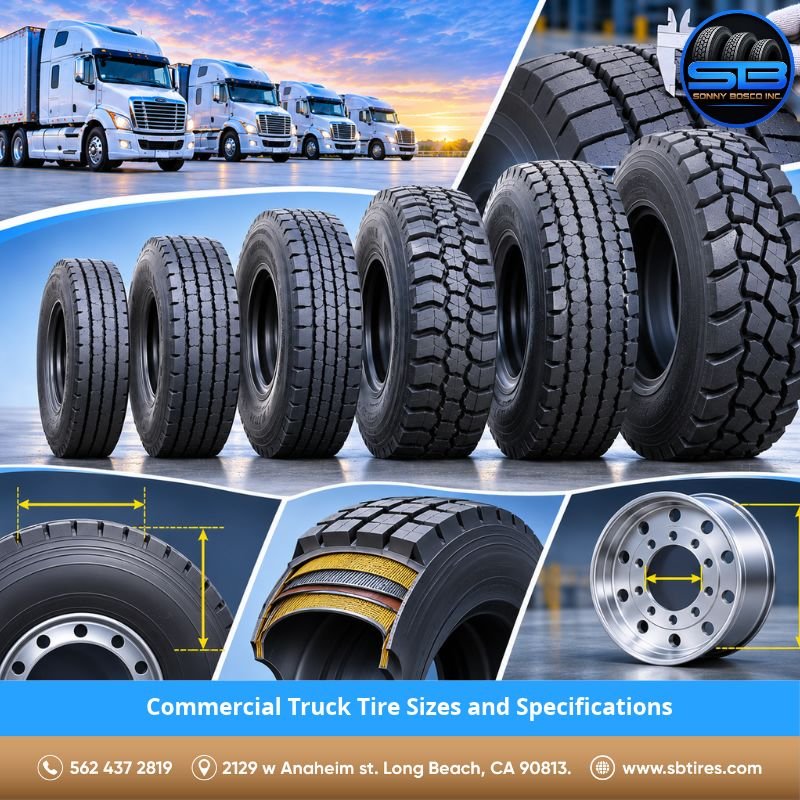
Checking specifications before requesting a quote helps avoid ordering the wrong size or load capacity. The sections below explain what to compare.
Common Commercial Tire Sizes
A small group of sizes covers a large share of commercial trucks on US roads. Common sizes include:
- 11R22.5 commercial tires: One of the most widely used sizes for tractors and trailers in long-haul and regional service;
- 295/75R22.5 commercial tires: A metric size used on many steer, drive and trailer positions, with overall dimensions that differ from 11R22.5 depending on the model;
- 11R24.5 truck tires: Designed for 24.5-inch wheels and used on certain tractors and vocational trucks.
Available sizes in each DRC line can be checked on the product page or confirmed with the SONNY BOSCO team.
Load Range, Load Index and Ply Rating
Load specifications determine how much weight a tire can safely carry. Each term means something specific:
- Load range: A letter rating such as G or H that indicates the tire’s load-carrying capabilities under specified inflation conditions;
- Ply rating: A strength designation associated with the load range. For example, load range G corresponds to a 14-ply rating and load range H to a 16-ply rating;
- Load index: A number on the sidewall indicating the maximum load per tire, often listed as two values for single and dual mounting;
- Inflation pressure: Maximum load capacity depends on the correct inflation pressure, so always check the manufacturer’s load and inflation table.
Radial vs. Bias Commercial Tires
Radial and bias tires are built differently, which affects how each type performs. The table below compares both types side by side:
| Criteria | Radial Tires | Bias Tires |
| Construction | Cords run across the tire at 90 degrees, with steel belts under the tread | Cords cross diagonally in alternating layers |
| Sidewall | Flexible sidewall, stable tread contact | Stiff, thick sidewall resistant to cuts |
| Heat buildup | Generally lower at highway speeds | Generally higher during long, high-speed runs |
| Fuel efficiency | Better due to lower rolling resistance | Generally lower |
| Ride comfort | Smoother ride | Firmer ride |
| Typical applications | Long-haul, regional and highway fleets | Off-road, industrial, construction and low-speed heavy loads |
Commercial Tire Prices and Wholesale Options
Commercial tire prices vary by size, construction, product line and order volume, so one price list rarely fits every buyer. Requesting a quote for the exact model and size provides the most accurate pricing.
Factors That Affect Commercial Tire Prices
Several factors determine the final cost of each tire. The table below outlines the main ones:
| Factor | How It Affects Price |
| Tire size | Larger sizes and wider tires generally require more material |
| Construction | Radial and bias tires differ in materials and production processes |
| Load rating | Higher load ranges may require stronger casings |
| Tire model | Tread design and compound vary by product line |
| Order quantity | Bulk orders may qualify for wholesale pricing |
Note: Prices may vary based on stock, shipping location and market conditions at the time of ordering. For the most accurate pricing, contact SONNY BOSCO at 562-437-2819.
Bulk Commercial Tire Orders for Fleets and Distributors
SONNY BOSCO supplies commercial tires at wholesale prices for businesses that buy in volume. To receive a wholesale quote more quickly, buyers should prepare the following details:
- Quantity: Total number of tires and any planned recurring orders;
- Tire size: For example, 11R22.5, 295/75R22.5 or 11R24.5;
- Model or application: Steer, drive, trailer or all-position, plus highway or off-road use;
- Delivery location: City and state for shipping, or pickup at the Long Beach location.
How to Choose the Right Commercial Tires
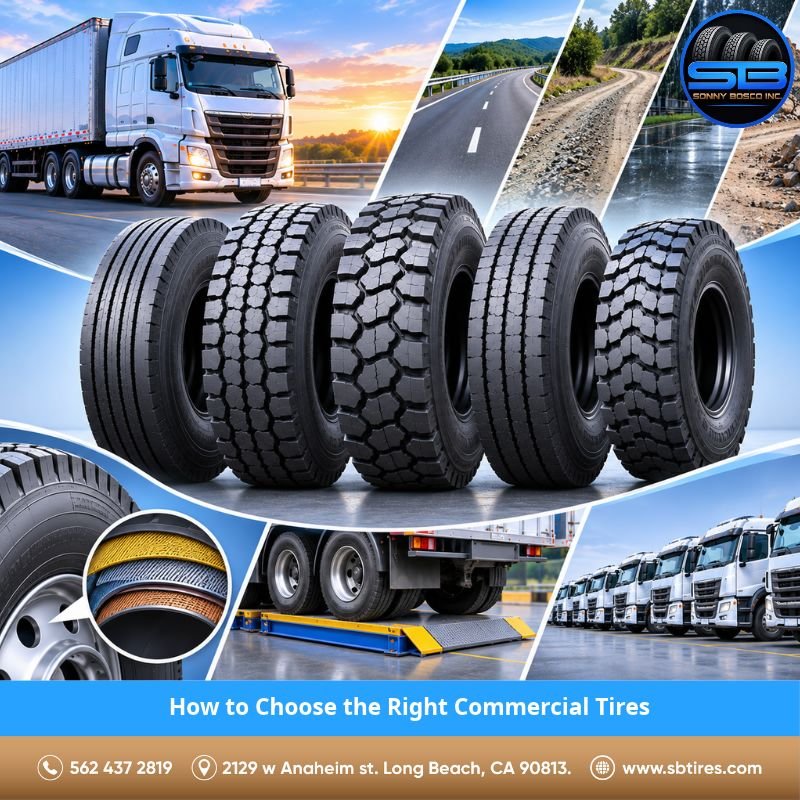
Choosing fleet tires starts with understanding how each truck is used. The three checks below help buyers make a confident decision.
Match Tires to Vehicle Type and Axle Position
The right tire must suit both the vehicle and its axle position. Buyers should confirm these basics first:
- Vehicle type: Tractor, straight truck, trailer or vocational vehicle;
- Axle load: The weight each axle carries when fully loaded;
- Axle position: Steer, drive or trailer, since each position has different performance requirements;
- Vehicle manufacturer requirements: Size, load range and wheel specifications listed by the truck manufacturer.
Consider Routes, Loads and Driving Conditions
Where and how a truck operates can significantly affect tire wear. Common operating conditions include:
- Long-haul: Steady highway speeds, where low rolling resistance and even wear matter most;
- Regional and local delivery: Frequent stops and turns that put extra stress on shoulders and sidewalls;
- Heavy hauling: High loads that require suitable load ratings and strong casings;
- Special road surfaces: Gravel, construction sites or ports, where cut resistance and traction are important.
Evaluate Tire Durability and Cost per Mile
The cheapest tire does not always offer the lowest operating cost for a fleet. Buyers should consider the following factors when comparing total operating costs:
- Tread life: How many miles a tire delivers before replacement;
- Fuel efficiency: Rolling resistance affects fuel consumption and operating costs;
- Maintenance: Regular pressure checks, alignment and rotation help extend tire life;
- Retreadability: A suitable casing may be retreaded after inspection, potentially lowering long-term cost per mile.
Why Choose SONNY BOSCO for Commercial Tires?
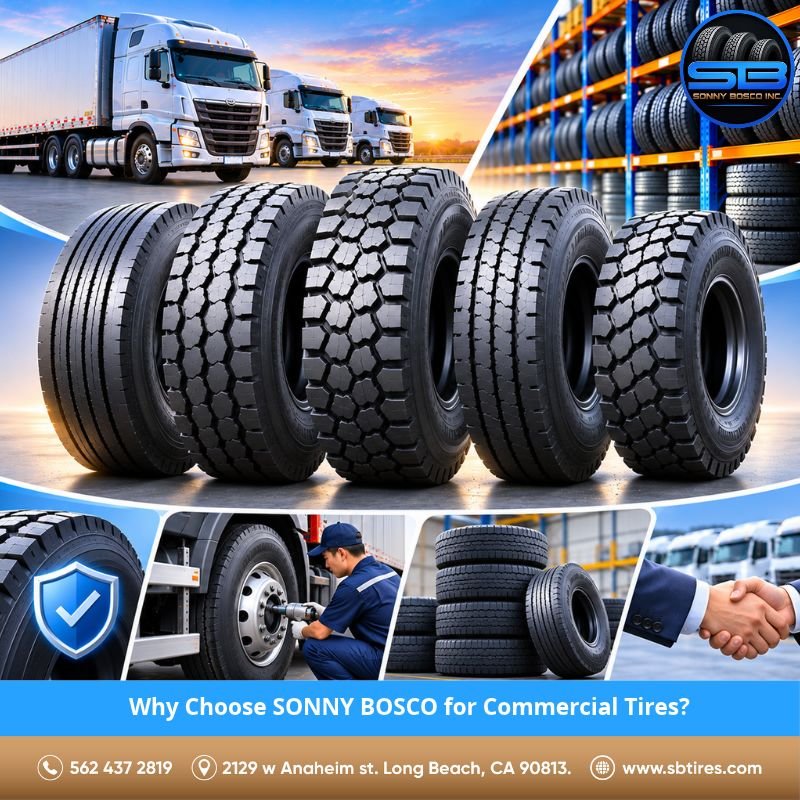
Fleet buyers need a supplier with reliable sourcing, product availability and practical support. SONNY BOSCO focuses on meeting these requirements through the following offerings:
- DRC tire supply: Access to tires from DRC, a tire manufacturer based in Vietnam;
- Product range: Radial tires, bias tires and accessories for highway, regional and heavy-duty applications;
- Product specifications: Assistance with confirming applicable compliance markings and documentation for each tire model;
- Fleet supply: Product availability and volume pricing inquiries for fleet operators and transport companies;
- Dealer partnership: Options for distributors and dealers interested in reselling DRC commercial tires;
- Quote assistance: Assistance with selecting the right tire size, load range and model for each truck and order.
Frequently Asked Questions About Commercial Tires
What is a commercial tire?
A commercial tire is built for vehicles used in business operations, such as trucks, tractors, trailers and vans. Compared with passenger tires, commercial truck tires typically feature stronger casings, higher load ratings and tread designs suited to demanding operating conditions.
How much do commercial truck tires cost?
Commercial truck tire prices depend on size, construction, load range, tire model and order quantity. Bulk orders may qualify for wholesale pricing. For an accurate price, send the size, model and quantity to SONNY BOSCO at 562-437-2819.
What is the difference between steer, drive and trailer tires?
Steer tires sit on the front axle and focus on handling and stability. Drive tires transfer engine power to the road and prioritize traction. Trailer tires roll freely and focus on load support and resistance to irregular wear.
What sizes are available for commercial truck tires?
Common commercial truck tire sizes include 11R22.5, 295/75R22.5 and 11R24.5. Available sizes vary by product line, so check the SONNY BOSCO product page or contact the team to confirm stock.
How do I choose commercial tires for my fleet?
Start with vehicle type, axle position and axle load. Then consider routes, driving conditions and the number of trucks in your fleet. Finally, compare tread life, fuel efficiency and cost per mile rather than price alone.
Where can I buy commercial tires in Long Beach, California?
SONNY BOSCO supplies commercial tires from 2129 W Anaheim St., Long Beach, CA 90813. Buyers can call 562-437-2819, email Sbvnopt@gmail.com or request a quote at sbtires.com.
Finding the right commercial tires is easier with clear specifications and a supplier who understands fleet needs. We hope this guide helps you compare tire positions, sizes and construction types with confidence. For wholesale pricing or product advice, contact SONNY BOSCO at 562-437-2819 or visit sbtires.com.


