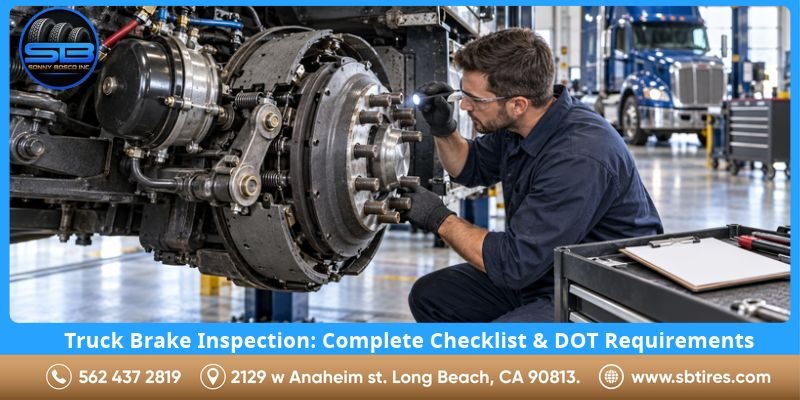
A single tire failure on the highway can sideline a loaded truck, delay deliveries and put the driver and other motorists at risk. That is why commercial tire inspection matters so much: it is a systematic check of a truck tire’s inflation pressure, tread depth, sidewalls and visible damage before small problems turn into roadside breakdowns. For fleet operators, regular truck tire checks reveal wear, air loss and structural defects early, while the vehicle is still in the yard. In this guide, SONNY BOSCO, a commercial truck tire supplier based in Long Beach, California, walks you through a practical inspection checklist, a step-by-step process, the key DOT and FMCSA requirements and simple ways to keep tire records for your fleet.
What Is a Commercial Tire Inspection?
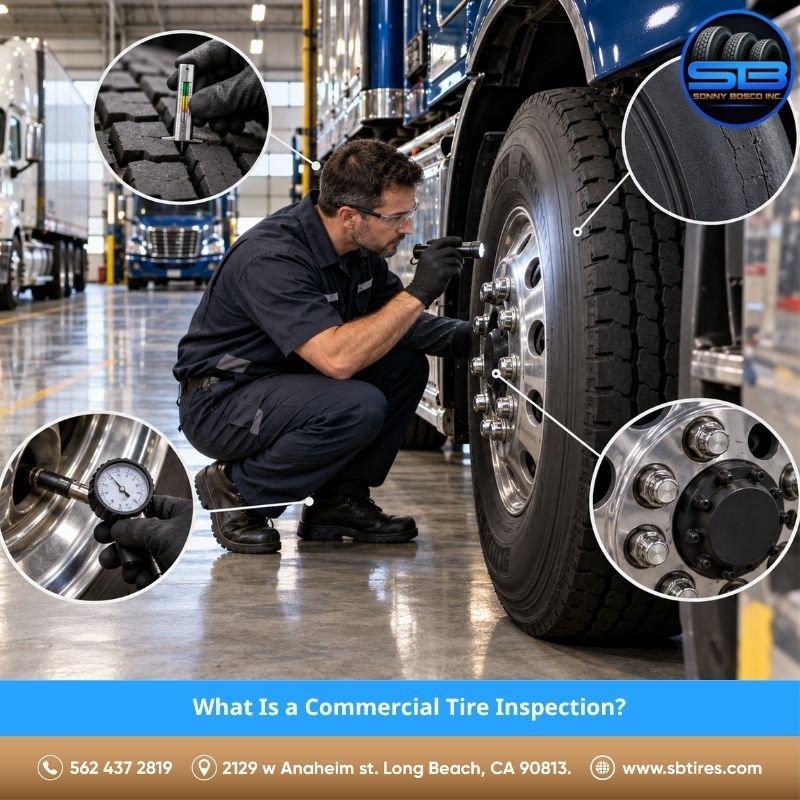
A commercial tire inspection is a structured evaluation of each tire on a truck, trailer or bus to confirm it is safe, properly inflated and legally compliant. The key points include:
- Scope: Covers pressure, tread depth, sidewalls, damage, valves and wheels;
- Drivers: Perform quick visual and hands-on checks before each trip;
- Technicians: Take gauge readings and evaluate damage during preventive maintenance;
- Fleet managers: Track results and schedule replacements across the fleet;
- Limitation: Does not replace a full commercial vehicle inspection of brakes, lights and steering.
Why Are Regular Commercial Tire Inspections Important?
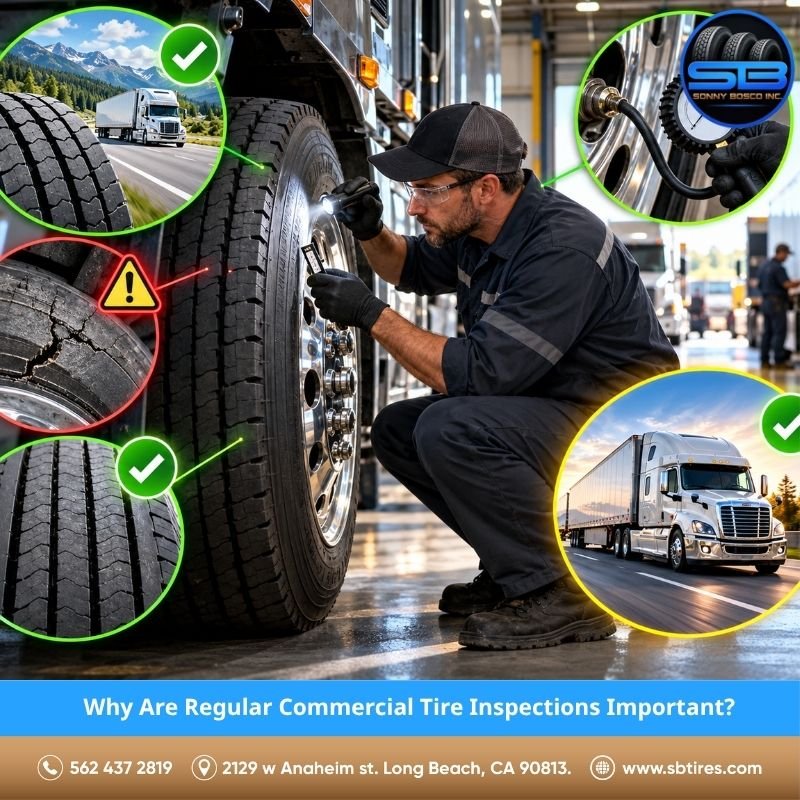
Tires are the only contact point between a loaded truck and the road, so regular inspections bring these benefits:
- Road safety: Catches bulges, exposed cords and deep cuts before a blowout;
- Less downtime: Finds slow leaks and punctures before they cause roadside breakdowns;
- Longer tire life: Correct inflation keeps wear even and casings retreadable;
- Lower costs: Reduces premature replacements, towing bills and cost per mile;
- DOT compliance: Helps avoid violations and out-of-service orders at roadside inspections;
- Better planning: Lets you schedule replacements based on actual wear data.
Commercial Tire Inspection Checklist: What Should You Check?
A reliable commercial tire inspection checklist covers six areas, from inflation to the wheels around each tire:
| Inspection Item | What to Check | Action if Defective |
| Tire pressure | Cold inflation against load specifications | Adjust pressure or investigate the source of air loss |
| Tread depth | Groove depth at several points, uneven wear | Compare with legal minimums, schedule replacement or evaluation |
| Sidewalls | Cuts, cracks, bulges, separation | Remove from service if structural damage is present |
| Tread condition | Punctures, embedded objects, exposed cords | Remove from service if cords are exposed, otherwise send for professional evaluation |
| Valves | Leaks, missing caps, damaged stems | Repair or replace components |
| Wheels and dual tires | Rim damage, loose fasteners, trapped objects | Correct the defect before operating |
How to Inspect Commercial Truck Tires Step by Step

Turning the checklist into a fixed routine makes every inspection faster and more consistent:
- Step 1: Park on level ground, set the brake and prepare a pressure gauge, tread depth gauge, flashlight and inspection form;
- Step 2: Measure cold pressure on every tire, including inner duals;
- Step 3: Inspect outer and inner sidewalls for cracks, bulges and cuts;
- Step 4: Measure tread depth and check for uneven wear or punctures;
- Step 5: Check valves, rims, lug nuts and the space between duals;
- Step 6: Record findings and send unsafe tires for professional evaluation before the truck operates.
DOT and FMCSA Commercial Tire Inspection Requirements
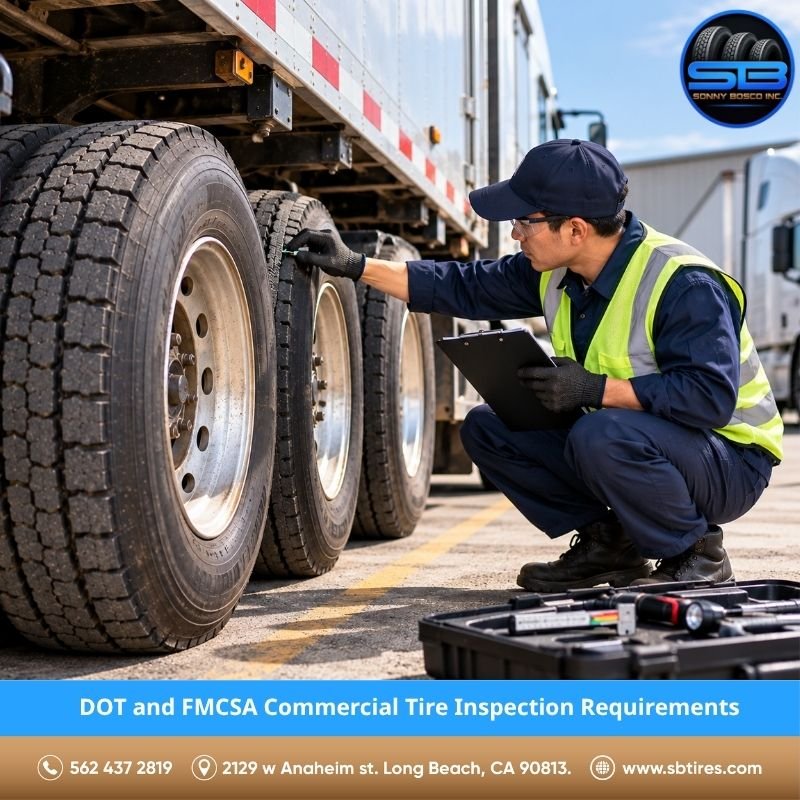
Under 49 CFR §393.75, enforced by FMCSA, a commercial truck tire may not be operated if it has any of these conditions:
- Low steer tread: Less than 4/32 inch on the front tires of a bus, truck or truck tractor, measured on a major tread groove;
- Low tread on other positions: Less than 2/32 inch on drive and trailer tires;
- Exposed cords: Body ply or belt material visible through the tread or sidewall;
- Separation: Any tread or sidewall separation;
- Air loss: A flat tire or an audible leak;
- Overloading or underinflation: A load above the rating marked on the sidewall, or a cold pressure below what the load requires.
How Often Should Commercial Truck Tires Be Inspected?

Rather than one fixed interval, inspect tires at these key moments in the operating cycle:
- Before each trip: Include a tire check in every driver’s pre-trip inspection;
- During routine maintenance: Take full pressure and tread depth readings at each scheduled service;
- After impacts: Recheck tires and wheels after hitting a pothole, curb or road debris;
- When problems appear: Reinspect if the driver notices vibration, pulling or pressure warnings;
- By fleet schedule: Add intervals based on mileage, route type, load and climate.
When Should a Commercial Truck Tire Be Repaired or Replaced?

Inspection findings usually fall into one of the following situations:
- Tread punctures: Small punctures in the tread area may be repairable after an internal inspection;
- Sidewall damage: Cuts or punctures in the sidewall usually require replacement;
- Irregular wear or repeated air loss: Needs a technician’s assessment before a decision is made;
- Regulatory defects: Exposed cords, separation, flats or audible leaks require removal from service;
- Final decision: Depends on tire construction, damage location, manufacturer limits and casing condition.
How to Maintain Tire Inspection Records for Your Fleet
Good records support fleet tire management and help show a systematic maintenance program, which DOT auditors look for under 49 CFR 396.3. A useful fleet tire inspection report should capture:
| Tire Position | Pressure (psi) | Tread Depth | Condition | Recommended Action |
| Left steer | 110 | 9/32 in | Good, even wear | No action |
| Right steer | 102 | 6/32 in | Slight shoulder wear | Adjust pressure, check alignment |
| Left drive, outer | 100 | 12/32 in | Good | No action |
| Left drive, inner | 88 | 11/32 in | Low pressure | Inspect for leak, reinflate |
| Right drive, outer | 100 | 3/32 in | Nearing limit | Schedule replacement |
Commercial Truck Tire Solutions from SONNY BOSCO

When an inspection shows a tire has reached the end of its safe service life, SONNY BOSCO can help you choose the right replacement:
- Commercial tire supplier: Provides tires and tire solutions for commercial, industrial and specialty applications;
- Exclusive DRC partner: Serves as DRC’s exclusive partner in the US, with clear sourcing and consistent supply;
- Product range: Offers radial tires, bias tires for heavy-duty use and maintenance accessories;
- Right fit for your fleet: Helps match tire size, load capacity, axle position and operating conditions;
- Contact: 2129 W Anaheim St, Long Beach, CA 90813, Hotline: 562 437 2819, Sbvnopt@gmail.com, sbtires.com.
Frequently Asked Questions About Commercial Tire Inspection
How Long Does a Commercial Tire Inspection Take?
A driver’s pre-trip tire check usually takes a few minutes. A full maintenance inspection with gauge readings on all 18 tires of a tractor trailer takes considerably longer.
What Is the Minimum Legal Tread Depth for Commercial Truck Tires?
Steer tires need at least 4/32 inch, and all other positions need at least 2/32 inch, measured in a major tread groove.
Can Truck Drivers Perform Tire Inspections Themselves?
Yes, for pre-trip checks. Removing tires, repairing damage or evaluating structural problems requires a qualified tire technician.
Can a Commercial Truck Tire Pass Inspection With Sidewall Damage?
Minor surface scuffs may not disqualify a tire. Exposed cords, bulges or sidewall separation mean the tire cannot be operated.
What Tools Are Needed for a Commercial Tire Inspection?
A calibrated pressure gauge, a tread depth gauge, a flashlight and an inspection form or digital checklist.
A consistent commercial tire inspection routine helps your fleet catch pressure problems, abnormal wear and structural damage early, stay aligned with DOT requirements and build reliable maintenance records over time. We hope this checklist helps your drivers and technicians inspect every tire with more confidence. Follow SONNY BOSCO at sbtires.com for more practical guides on truck tire maintenance, fleet tire management and choosing the right commercial truck tires for your operation.