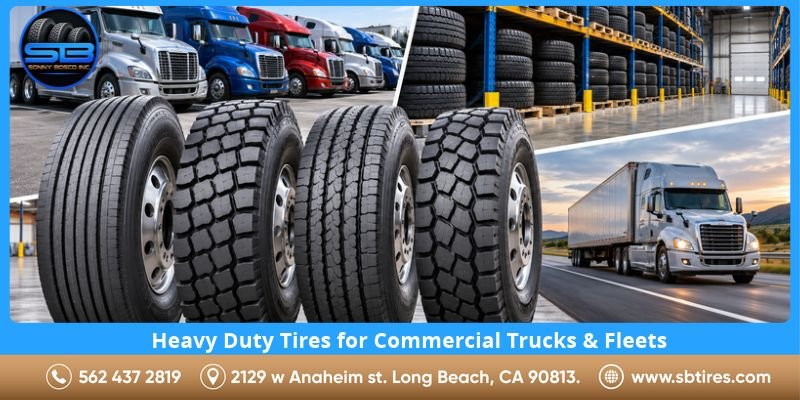
Truck tires decide how safely a load reaches its destination, how often a rig sits in the shop and how much each mile really costs. SONNY BOSCO supplies commercial and heavy-duty tire lines for trucking businesses, fleet operators and tire distributors across the US. You can compare options by size, axle position and operating conditions to find the right fit. Browse available truck tires below or contact our team for a quote.
Commercial Truck Tires Available at SONNY BOSCO
The SONNY BOSCO catalog is organized by tire construction and brand, so buyers can look at the same product from two angles: how the tire is built and who builds it.
Radial Truck Tires
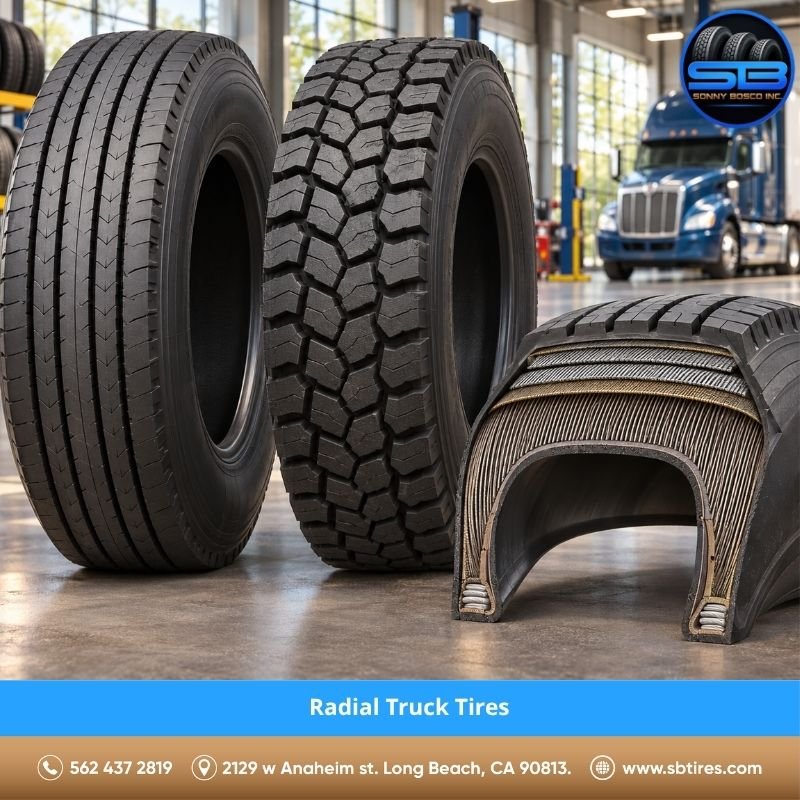
Radial construction is the standard choice for most on-highway commercial truck tires today, and these are the main traits to know.
- Construction: Steel cord plies run at 90 degrees to the direction of travel, with steel belts under the tread to stabilize the footprint.
- Heat control: A flexible sidewall and stable tread run cooler at highway speeds, which protects the casing over long distances.
- Tread life: Even ground contact reduces irregular wear and helps the tread last longer.
- Best applications: Long-haul, regional and delivery work on paved roads.
- Available models: See DRC radial truck tires for current sizes and load ratings.
Bias-Ply Heavy-Duty Truck Tires
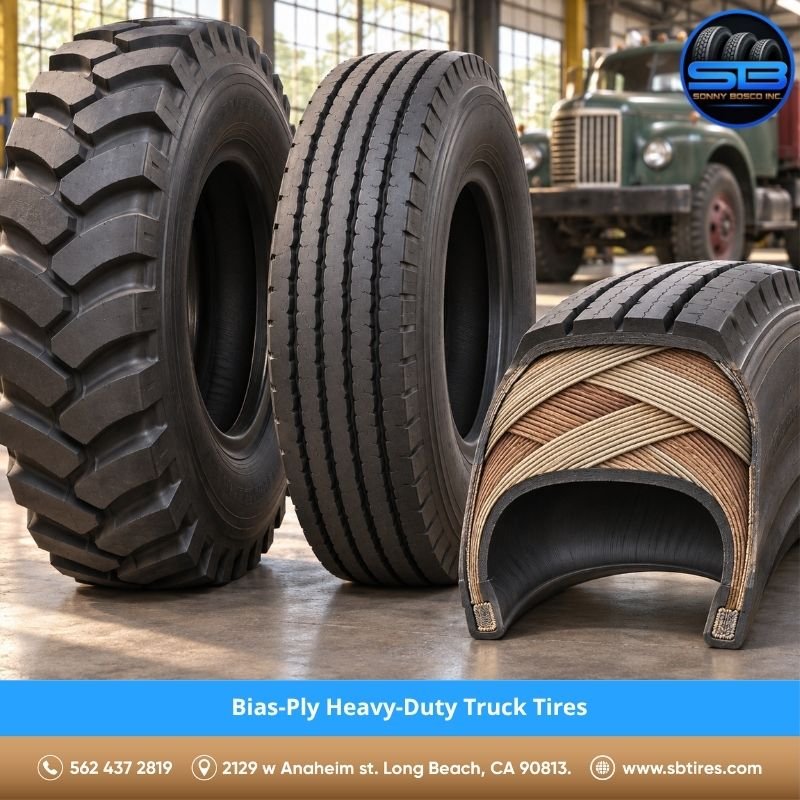
Bias-ply tires use an older, tougher construction that still has a clear place in heavy-duty work.
- Construction: Nylon plies cross each other diagonally, forming a thick, rigid body from bead to bead.
- Sidewall strength: A stiff sidewall resists cuts and impacts from rocks, debris and rough job sites.
- Load handling: The design suits heavy loads at lower speeds when the manufacturer specifies this use.
- Best applications: Construction, industrial and off-road work rather than sustained highway driving.
- Available models: Browse bias tires in the SONNY BOSCO catalog.
DRC Commercial Truck Tires
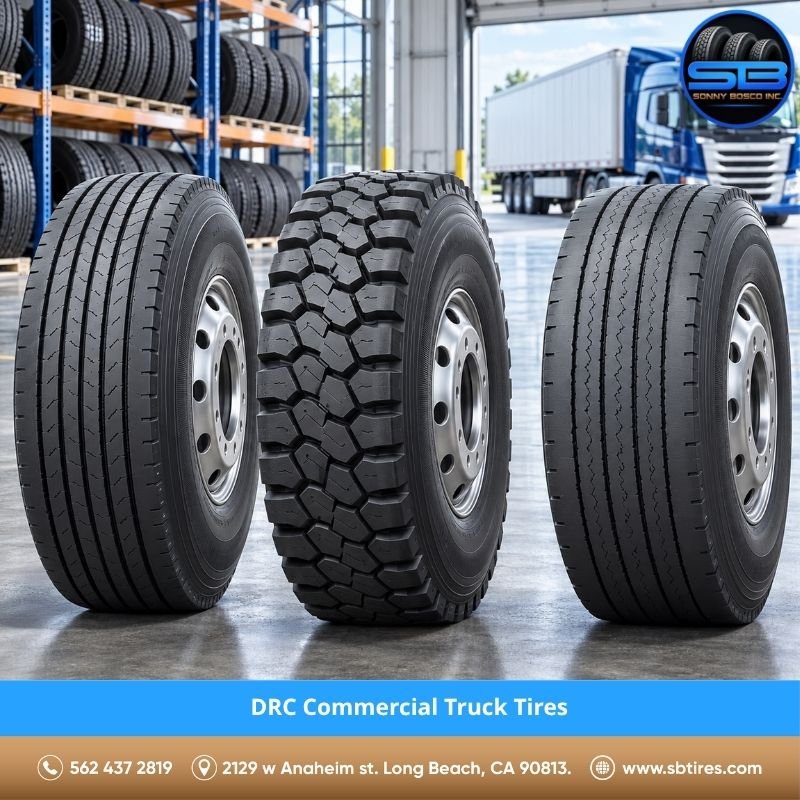
DRC is the main brand behind the SONNY BOSCO catalog, covering both radial and bias product lines.
- Manufacturer: DRC is a tire manufacturer based in Vietnam with modern production facilities.
- US partnership: SONNY BOSCO is the exclusive partner of DRC in the United States, giving buyers a clear, consistent supply source.
- Standards: DRC commercial tires are presented as meeting DOT and ISO standards; ask our team for documentation on any specific model.
- Product range: Radial and bias-ply tires for commercial, industrial and specialty applications.
Types of Truck Tires by Axle Position
Every axle on a tractor-trailer does a different job, so each position needs a tire with its own tread design and load profile.
Steer Truck Tires
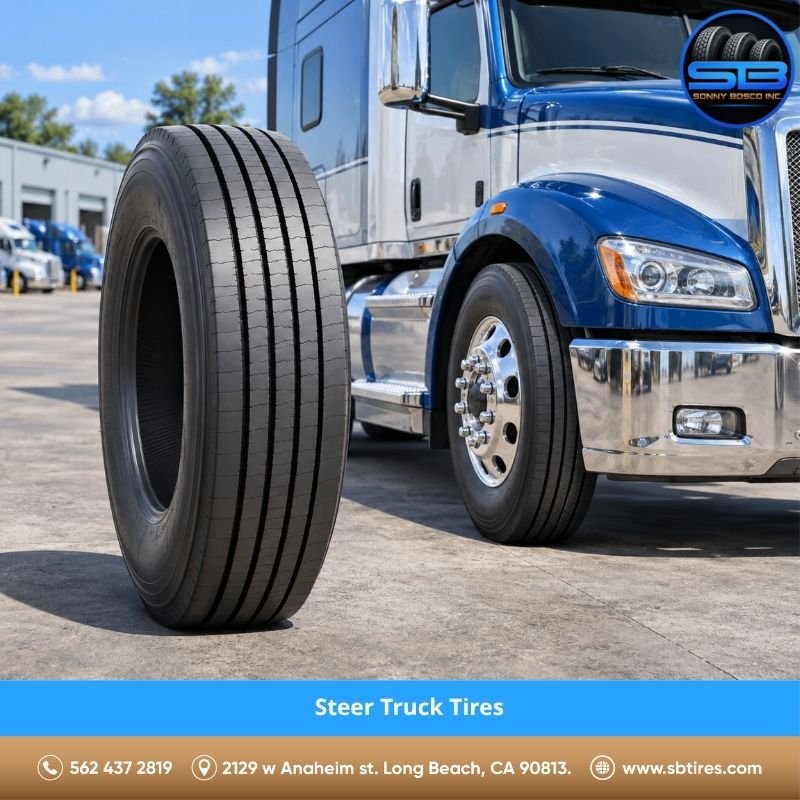
Steer tires sit on the front axle and directly control where the truck goes, so precision matters most here.
- Tread design: Usually a rib pattern with circumferential grooves for straight-line stability and responsive steering.
- Even wear: Shoulder designs that resist irregular wear protect handling and tire life.
- Legal tread depth: FMCSA rules require at least 4/32 inch of tread on steer tires, stricter than other positions.
- What to check: Size, load index for single fitment, speed rating and the truck maker’s approved fitment.
Drive Truck Tires
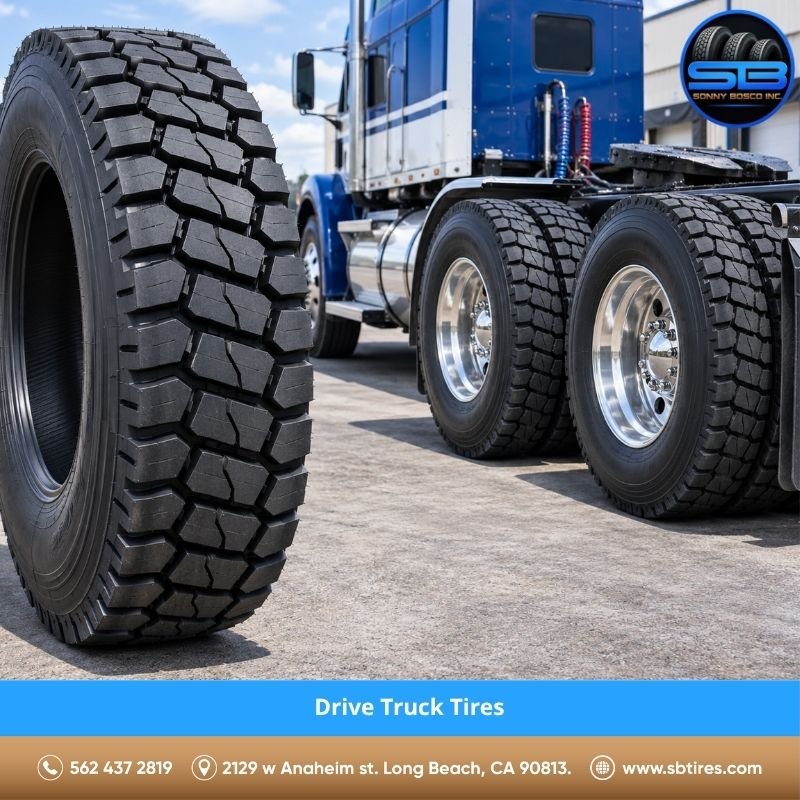
Drive tires mount on the powered axles and turn engine torque into forward motion on the road.
- Tread design: Lug or block patterns with deeper tread to grip the road under acceleration and climbing.
- Traction: Siping and open shoulders help with wet roads and mixed surfaces.
- Tread depth: Drive tires often start with deeper tread than steer or trailer tires for longer wear.
- Applications: Choose by model for long haul, regional routes or on/off-road service.
Trailer Truck Tires
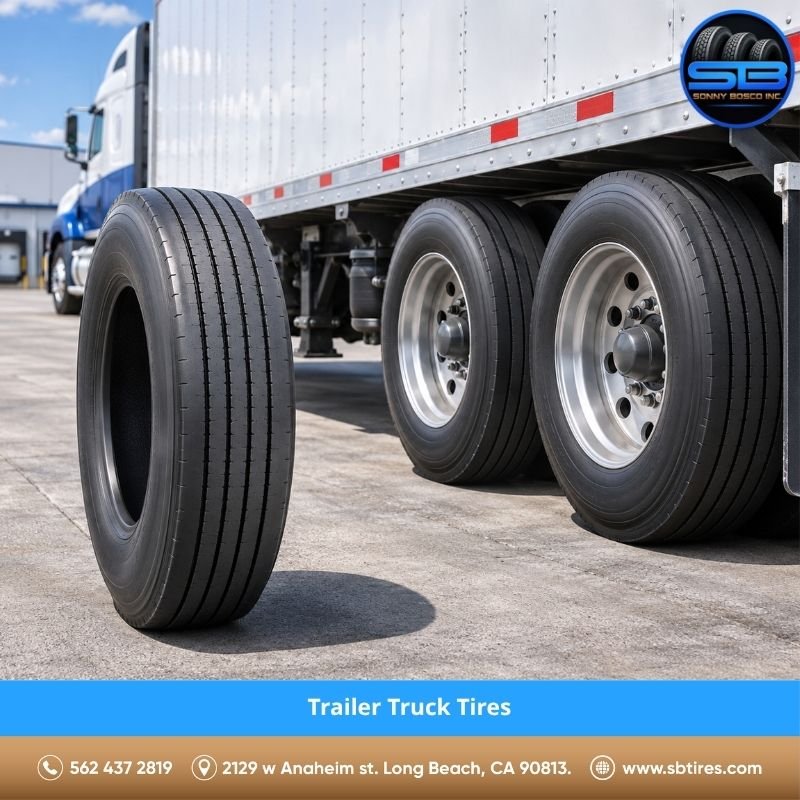
Trailer tires are free rolling, carrying weight without steering or pulling the load.
- Stability: A rib pattern keeps the trailer tracking straight behind the tractor.
- Scrub resistance: Tight turns at docks and yards drag trailer tires sideways, so tough compounds matter.
- Load capacity: Trailers often carry heavy loads on dual fitments, so check the dual load rating carefully.
- Rolling resistance: Low rolling resistance trailer tires help cut fuel costs on long routes.
All-Position Truck Tires
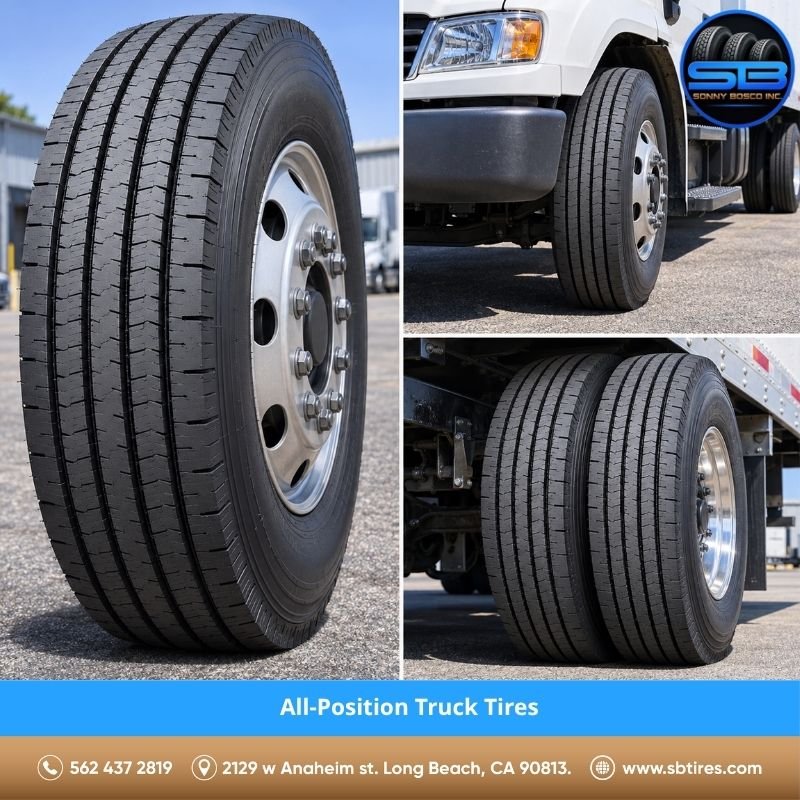
All-position tires are designed to work on steer, drive or trailer axles, giving fleets more flexibility.
- Flexibility: One tire model can simplify spare stock for vocational and mixed-use fleets.
- Typical use: Regional, urban and vocational trucks that need balanced handling and traction.
- Limits: Always confirm the manufacturer’s approved positions, load ratings and speed limits for each model.
- Selection: Match the tire to the truck configuration and real axle loads, not to convenience alone.
Truck Tires for Different Driving Applications
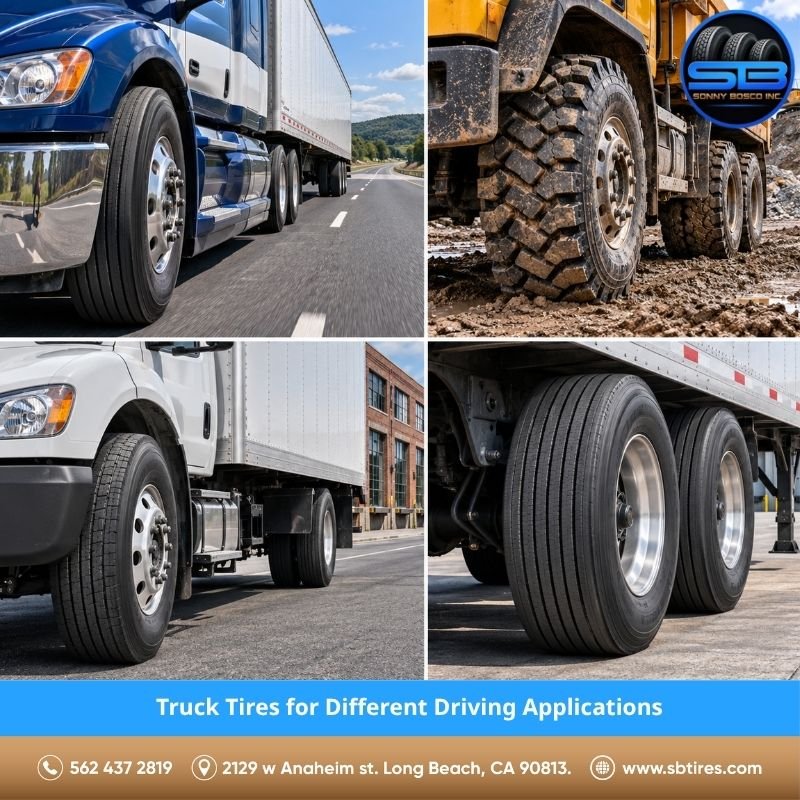
The routes your trucks run every day should shape tire choice as much as axle position does.
Long-Haul Highway Truck Tires
Long-haul tires are made for trucks covering long highway miles at steady speeds between terminals and distribution centers.
- Tread life: Deep, wear-resistant compounds stretch miles between replacements.
- Heat management: Casings must handle hours of continuous highway speed without overheating.
- Rolling resistance: Lower resistance cuts fuel use, one of the largest costs in line-haul service.
- California compliance: Fleets running tractors and 53-foot box trailers in California should check CARB rules on SmartWay-verified low rolling resistance tires.
Regional and Local Delivery Truck Tires
Regional and local delivery tires face frequent stops, tight turns and constantly changing road surfaces.
- Stop-and-go durability: Compounds handle repeated braking and acceleration without chunking.
- Scrub resistance: Reinforced shoulders resist wear from turning in yards, docks and city streets.
- Curb protection: Sidewall protection helps against curb contact in urban routes.
- Local example: Drayage trucks around the Port of Long Beach and I-710 corridor face exactly these conditions.
On/Off-Road Heavy-Duty Truck Tires
On/off-road tires serve dump trucks, mixers and work trucks moving between pavement and job sites.
- Cut and chip resistance: Tough tread compounds resist damage from rock, gravel and debris.
- Traction: Aggressive, self-cleaning tread patterns grip mud and loose ground.
- Casing strength: Strong casings withstand impacts and heavy loads on uneven terrain.
- Product choice: Only use models the manufacturer designates for on/off-road service.
Truck Tire Sizes and Load Specifications

Reading the sidewall correctly before ordering prevents costly returns and unsafe fitments.
Common Commercial Truck Tire Sizes
Commercial truck tire sizes follow a standard code that tells you width, profile and wheel diameter.
- 11R22.5: About 11 inches wide, radial construction, fits a 22.5-inch wheel; a long-standing standard size.
- 295/75R22.5: 295 mm wide, sidewall height 75 percent of width, radial, fits a 22.5-inch wheel; a common low-profile size.
- 285/75R24.5: 285 mm wide, 75 aspect ratio, radial, fits a 24.5-inch wheel; widely used on Class 8 trucks.
- Reference only: These sizes explain the format; check the product catalog for current availability.
- Matching: Confirm the size on your vehicle’s tire placard and wheel stamping before ordering.
Load Range, Load Index, and Speed Rating
Load figures tell you how much weight each tire can safely carry, and they differ for single and dual mounting.
- Load range: A letter such as G, H or J showing tire strength, tied to the older ply rating system.
- Load index: A number such as 146/143, where the first figure is the single load rating and the second is the dual rating.
- Speed rating: A letter showing the maximum sustained speed the tire is built for under rated load.
- Axle check: Multiply the tire’s load rating by the number of tires on the axle and compare it with the axle’s gross weight.
- Inflation: Rated loads apply only at the correct pressure; see our truck tire pressure guide.
Tread Pattern, Tire Construction, and Durability
Tread and construction work together to decide how long a tire lasts and where it performs best.
- Tread pattern: Rib designs suit steer and trailer axles, while lug designs suit drive axles and rough roads.
- Construction: Radial tires favor highway efficiency, while bias tires favor rugged, lower-speed work.
- Casing: The tire body under the tread; a healthy casing can often be retreaded, lowering long-term costs.
- Durability: Good casing care, correct pressure and regular truck tire inspections extend service life.
Truck Tire Prices and Wholesale Quote Requests
Truck tire prices vary widely by product and order details, so a direct quote gives the most accurate number.
What Affects Commercial Truck Tire Prices?
Several factors work together to set the final price of a commercial tire.
- Size and load specs: Larger sizes and higher load ranges use more material and cost more.
- Construction and tread: Radial versus bias and the depth and design of the tread affect price.
- Brand and model: Product line, technology and warranty terms create price differences.
- Quantity and delivery: Order volume, freight and pickup or delivery location affect the total.
Bulk Truck Tire Orders for Fleets and Distributors
Fleet operators and distributors can request pricing for larger orders by sharing a few key details.
- Sizes and models: List each tire size and the model or application you need.
- Quantities: Give the number of tires per size so the team can check supply.
- Vehicle and technical needs: Note truck type, axle positions and any load or compliance requirements.
- Delivery location: Share where the tires need to go to estimate logistics.
- How to request: Use the wholesale quote form or call Hotline: 562 437 2819.
How to Choose the Right Truck Tires for Your Fleet
A quick check of fit and cost before ordering saves fleets from downtime and wasted spending.
Match Tire Specifications to Your Truck
The right tire starts with the truck itself, not with the lowest price on the list.
- Approved sizes: Use sizes listed on the vehicle placard or approved by the truck maker.
- Load and wheel specs: Confirm load ratings, wheel width and single or dual fitment.
- Position and application: Choose tires rated for the axle and the routes the truck actually runs.
Compare Tire Life, Traction, and Operating Costs
The cheapest tire upfront is not always the cheapest tire per mile.
- Wear and road conditions: Estimate tread life based on your routes, loads and speeds.
- Traction and load capacity: Balance grip and strength against fuel efficiency.
- Total cost of ownership: Factor in fuel, downtime, retreadability and replacement intervals, not just the purchase price.
- Fleet routine: A regular fleet tire checklist helps track which tires deliver the best value.
Why Choose SONNY BOSCO for Commercial Truck Tires?
SONNY BOSCO focuses on commercial and heavy-duty tires, serving businesses that need dependable supply and clear sourcing.
DRC Tire Distribution and Product Sourcing
Buyers know exactly where every SONNY BOSCO tire comes from.
- Exclusive US partner: SONNY BOSCO is DRC’s exclusive partner in the United States.
- Commercial focus: The catalog centers on radial and bias tires for commercial, industrial and heavy-duty use.
- Learn more: Read more on the About Us page or browse DRC products.
Truck Tire Solutions for Fleet and Wholesale Buyers
The SONNY BOSCO team works with buyers to find tires that fit both the truck and the budget.
- Product guidance: Advice on choosing tires by size, axle position and application.
- Supply for businesses: Support for fleets, trucking companies and tire distributors.
- Quote support: Help finding matching products and preparing quotes for single or bulk orders.
Contact SONNY BOSCO in Long Beach, California
You can reach the SONNY BOSCO team directly through the following channels.
- Address: 2129 W Anaheim St, Long Beach, CA 90813
- Hotline: 562 437 2819
- Email: Sbvnopt@gmail.com
- Website: https://sbtires.com/
- Quote: Request a Truck Tire Quote
Frequently Asked Questions About Truck Tires
What Is the Difference Between Commercial Truck Tires and Light Truck Tires?
Light truck (LT) tires fit pickups, vans and light-duty trucks, usually on 16 to 20-inch wheels. Commercial truck tires fit medium and heavy-duty trucks, typically on 19.5, 22.5 or 24.5-inch wheels. They carry much heavier loads, use stronger casings and are often designed to be retreaded.
What Is the Difference Between Steer, Drive, and Trailer Tires?
Steer tires guide the truck and prioritize handling and even wear. Drive tires transfer engine power and need lug treads for traction. Trailer tires roll freely, carry load and resist scrubbing. Fitting the wrong tire on an axle can reduce safety, wear tires quickly and hurt fuel economy.
What Are the Most Common Semi Truck Tire Sizes?
The most common semi truck tire sizes include 11R22.5, 295/75R22.5, 11R24.5 and 285/75R24.5. Low-profile 22.5-inch sizes are widely used on modern tractors and trailers. Always confirm the correct size from your vehicle placard and wheels before buying.
How Much Do Commercial Truck Tires Cost?
The cost depends on tire size, model, load rating, construction and order quantity. Fleet and wholesale orders are usually quoted per order. For accurate pricing, contact SONNY BOSCO through the quote form or Hotline: 562 437 2819.
How Often Should Commercial Truck Tires Be Replaced?
There is no fixed mileage. Replace tires when tread wear, damage, age or manufacturer guidance call for it. Under FMCSA rules, steer tires must have at least 4/32 inch of tread and other positions at least 2/32 inch. Route conditions and maintenance habits strongly affect replacement intervals.
Where Can I Buy Commercial Truck Tires in Long Beach, CA?
You can buy commercial truck tires from SONNY BOSCO at 2129 W Anaheim St, Long Beach, CA 90813. Call Hotline: 562 437 2819, email Sbvnopt@gmail.com or request a quote at sbtires.com.
The right truck tires keep your fleet safer on the road, reduce fuel and downtime costs and help every load arrive on schedule. Whether you run long-haul tractors, regional delivery trucks or heavy-duty work trucks, SONNY BOSCO can help you find tires that match your vehicles and routes. Contact our team at Hotline: 562 437 2819 or visit sbtires.com to request a quote today.