There is no single correct PSI for every semi-truck. Proper tire inflation affects vehicle stability, tire life, fuel consumption, and roadside downtime. The correct pressure depends on tire size, axle load, and tire position. This truck tire pressure guide from SONNY BOSCO explains how to determine cold inflation pressure using manufacturer load-and-inflation tables. You’ll also learn how to check tire pressure, identify inflation problems, and maintain commercial truck tires more effectively.
Truck Tire Pressure Guide for Choosing the Correct PSI
The correct tire pressure for a semi-truck depends on the load each tire carries, its size, load rating, and operating conditions. The manufacturer’s load-and-inflation table provides the minimum cold pressure needed to support a specified load. The final operating pressure must also account for vehicle requirements and tire performance.
For most commercial trucks, three axle positions require particular attention:
| Tire position | Typical configuration | Main pressure considerations |
| Steer | Single tires | Steer axle load, tire size, and load range |
| Drive | Dual tires | Drive axle load, dual tire ratings, and load distribution |
| Trailer | Dual or approved wide single tires | Trailer axle load, tire configuration, and operating conditions |
Semi Truck Tire Pressure Chart by Tire Size and Load
A semi truck tire pressure chart helps drivers and fleet managers compare tire load capacity with cold inflation pressure. However, two tires with the same dimensions may have different ratings depending on their load range, construction, and manufacturer.
The following reference table shows selected Michelin truck tire load ratings and their corresponding inflation pressures.
| Tire size | Load range | Fitment | Rated load | Corresponding pressure |
| 11R22.5 | G | Single | 6,175 lb per tire | 105 PSI |
| 11R22.5 | G | Dual | 5,840 lb per tire | 105 PSI |
| 11R22.5 | H | Single | 6,610 lb per tire | 120 PSI |
| 11R24.5 | H | Single | 7,160 lb per tire | 120 PSI |
How to Calculate the Correct Truck Tire Pressure

Determining the correct truck tire pressure requires more than checking the maximum PSI printed on the sidewall. Fleet operators should use actual axle weights and manufacturer load-and-inflation tables to establish the appropriate cold inflation pressure.
Follow these steps to calculate the correct truck tire pressure:
- Identify tire specifications: Check the tire sidewall for size, load range, and single or dual load ratings.
- Measure axle weight: Use a certified scale to determine the actual weight carried by each axle.
- Calculate load per tire: Divide axle weight by 2 for single tires or 4 for dual tires, assuming even weight distribution.
- Check the manufacturer’s chart: Find the load-and-inflation table matching the tire size, model, load range, and configuration.
- Determine the required PSI: Select a cold inflation pressure that supports the operating load according to the manufacturer’s recommendations.
- Confirm and record pressure: Verify vehicle and wheel requirements, account for uneven loading, and record the target PSI for each axle position.
Truck Tire Pressure by Axle Position
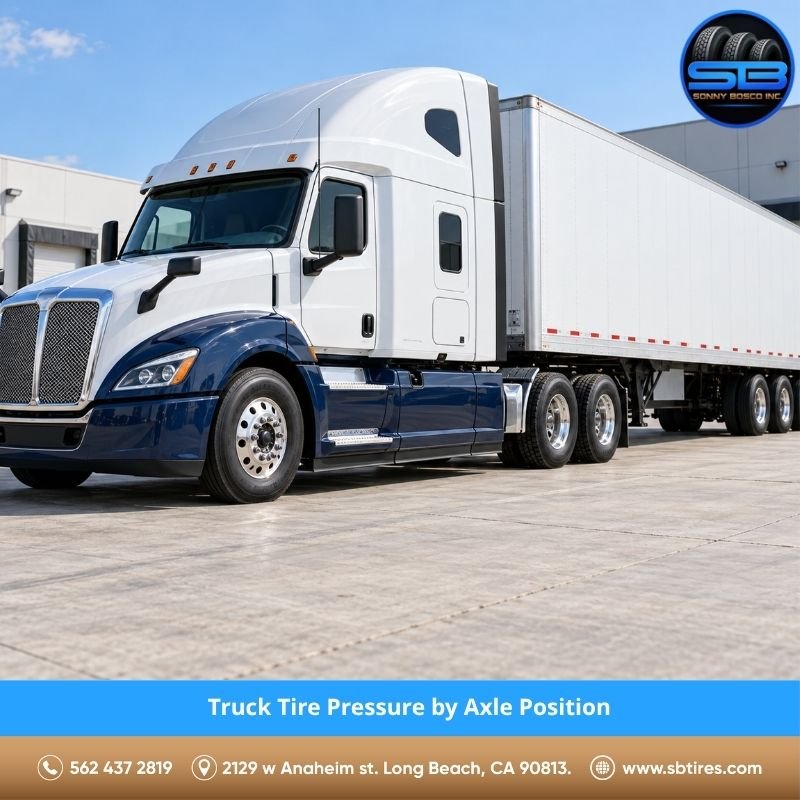
Commercial trucks may require different inflation pressures at different axle positions because each axle performs a different function and carries a different load. Understanding these differences helps fleet operators avoid using one pressure setting across the entire vehicle without checking its suitability.
Steer Tire Pressure
Steer tires support the front axle and play an important role in vehicle handling and directional stability. Their inflation pressure must support the actual steer axle load while meeting the tire manufacturer’s specifications. Check both steer tires during inspections. Unequal pressure may contribute to irregular wear and steering concerns.
Drive Tire Pressure
Drive tires transfer engine power to the road and often operate in dual configurations. Use the appropriate dual load rating when selecting pressure for these installations. The load carried by each tire depends on axle loading and tire configuration.
Paired dual tires should maintain matching inflation pressures and meet the manufacturer’s tire-matching requirements. Significant pressure differences can contribute to uneven load sharing and premature wear.
Trailer Tire Pressure
Trailer tire pressure must account for the load carried by each trailer axle rather than the total cargo weight alone. Cargo distribution, trailer configuration, and operating conditions may affect axle loading.
When connecting to a different trailer, inspect all accessible tires and confirm that the inflation specifications are suitable for the expected operating load.
Cold vs. Hot Truck Tire Pressure: What’s the Difference?
Cold tire pressure is measured before driving, while hot tire pressure is measured after the tires have warmed up during operation. Understanding the difference helps drivers maintain proper inflation and avoid unnecessary pressure adjustments.
| Factor | Cold Tire Pressure | Hot Tire Pressure |
| Definition | Pressure measured before tires heat up from driving | Pressure measured after tires warm up during operation |
| Pressure level | Reflects inflation at ambient temperature | Usually higher due to heat buildup |
| Measurement time | Before the first trip of the day | After driving or extended operation |
| Accuracy | Standard reference for manufacturer inflation tables | Not directly comparable to cold PSI targets |
| Adjustment | Inflate according to manufacturer specifications | Do not release air simply to match cold PSI |
| Weather impact | Cold temperatures generally lower PSI | Influenced by operating heat and ambient temperature |
How to Check Semi Truck Tire Pressure Correctly

Regular tire pressure checks help identify air loss before it causes excessive wear or unexpected downtime. Visual inspections alone cannot determine the correct PSI, so drivers should use a reliable pressure gauge.
Follow these steps to check semi-truck tire pressure correctly:
- Prepare a pressure gauge: Use a calibrated commercial truck tire gauge, preferably a dual-head model for easier valve access.
- Park the truck safely: Choose a level surface, secure the vehicle, and check tires when cold.
- Measure each tire: Remove the valve cap and check all tire positions, including inner and outer dual tires.
- Compare pressure readings: Check the measured PSI against the manufacturer’s recommended cold inflation pressure.
- Inspect and adjust pressure: Check for air leaks, damaged valves, cuts, or bulges. Have qualified technicians inspect damaged or severely underinflated tires before reinflation.
- Record inspection results: Log the date, vehicle ID, tire position, measured PSI, and any adjustments for future maintenance.
Underinflated vs. Overinflated Truck Tires
Both underinflation and overinflation can negatively affect commercial truck tire performance. However, each condition may produce different operating symptoms and wear patterns.
| Factor | Underinflated tires | Overinflated tires |
| Tire behavior | Excessive flexing and heat buildup | Increased stiffness |
| Possible tread wear | Shoulder wear | Center tread wear |
| Performance concerns | Higher rolling resistance and possible handling issues | Reduced ride comfort and potential traction concerns |
| Potential damage | Casing damage and tire failure | Increased susceptibility to certain impact damage |
| Recommended action | Inspect for leaks and verify cold pressure | Verify cold pressure against manufacturer specifications |
Truck Tire Pressure Guide and Maintenance Checklist for Fleets
A consistent maintenance schedule helps fleet managers monitor tire condition and reduce avoidable roadside problems. The following checklist can be incorporated into driver inspections and preventive maintenance procedures.
| Inspection | Recommended action |
| Pre-trip | Inspect visible tire condition, damage, and obvious pressure concerns |
| Scheduled cold-pressure checks | Measure and record PSI at every tire position |
| Periodic maintenance | Inspect tread wear, valves, dual tire matching, and recurring air loss |
| Seasonal checks | Recheck inflation when ambient temperatures change significantly |
| Fleet records | Track pressure history, repairs, and tire replacement decisions |
Commercial Truck Tires and Heavy-Duty Parts at SONNY BOSCO
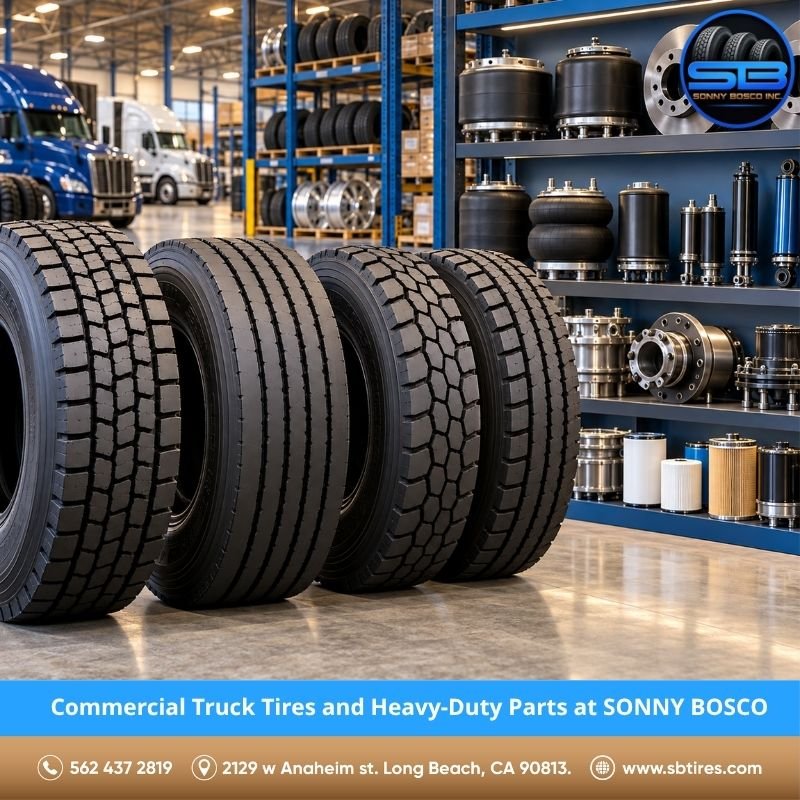
Choosing suitable commercial truck tires starts with understanding the vehicle’s load requirements, tire dimensions, and operating conditions.
SONNY BOSCO, based in Long Beach, California, supplies commercial truck tires and heavy-duty truck products for transportation businesses, fleet operators, and parts buyers.
As a U.S. partner of DRC, SONNY BOSCO offers commercial tire products for heavy-duty transportation applications. Buyers can explore available tire options and confirm the appropriate sizes, load ratings, and configurations for their vehicles.
For product information and inquiries, contact SONNY BOSCO:
- Address: 2129 W Anaheim St, Long Beach, CA 90813.
- Phone: 562-437-2819.
- Email: Sbvnopt@gmail.com.
- Website: sbtires.com.
Frequently Asked Questions About Truck Tire Pressure
What PSI Should Semi Truck Tires Be?
There is no universal PSI for all semi-truck tires. The appropriate cold inflation pressure depends on tire size, load rating, actual operating load, and configuration. Consult the manufacturer’s load-and-inflation table to determine the correct pressure for the application.
Should I Inflate My Truck Tires to the Maximum PSI on the Sidewall?
Not automatically. The tire’s sidewall markings identify rated load and inflation information, but the appropriate operating pressure depends on the actual application. Use the manufacturer’s recommendations while observing applicable tire, vehicle, and wheel requirements.
How Often Should Commercial Truck Tire Pressure Be Checked?
Drivers should inspect tire condition before trips and measure cold inflation pressure according to a regular maintenance schedule. Inspection frequency depends on operating conditions, manufacturer guidance, and fleet maintenance requirements.
Does Cold Weather Lower Semi Truck Tire Pressure?
Yes. Lower ambient temperatures generally reduce measured tire pressure. Check inflation more frequently during significant seasonal temperature changes and adjust cold pressure when necessary.
Why Do Dual Truck Tires Need Matching Pressure?
Unequal pressure can cause uneven load sharing between paired tires, contributing to irregular wear, heat buildup, and premature tire damage. Dual tires should follow the manufacturer’s pressure and matching specifications.
Can Low Truck Tire Pressure Cause a Blowout?
Yes. Prolonged underinflation increases tire flexing and heat buildup. These conditions can damage the tire casing and increase the risk of sudden failure, especially during heavy-duty operation.
This truck tire pressure guide highlights why proper inflation depends on actual axle loads, tire specifications, and manufacturer load-and-inflation tables rather than a universal PSI recommendation. Regular cold-pressure checks and consistent maintenance records can help fleets reduce tire wear, improve operational safety, and minimize unexpected downtime. For more commercial truck tire information and maintenance guidance, visit SONNY BOSCO.