How do you know if your commercial truck tires are safe for the next trip? Regular inspections help drivers and fleet managers identify potential problems before they lead to costly breakdowns or safety risks. In this guide, SONNY BOSCO explains how to inspect truck tires in seven practical steps, covering tire pressure, tread depth, sidewall damage, uneven wear, inner dual tires, and wheel components.
Why Is Regular Truck Tire Inspection Important?
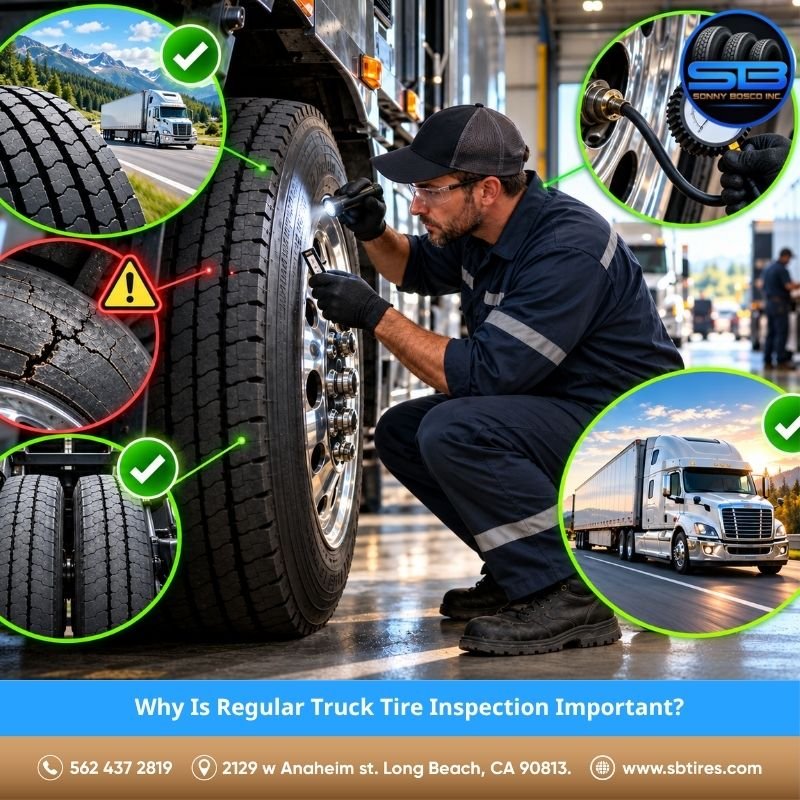
Commercial truck tires carry heavy loads and operate over long distances, making regular inspections essential for safe and efficient transportation. Checking tire conditions before each trip helps detect problems early and reduces the risk of unexpected downtime.
Here are the main benefits of regular truck tire inspections:
- Fewer roadside breakdowns: Identifying low tire pressure, air leaks, and visible damage helps prevent unexpected tire failures.
- Early problem detection: Uneven tread wear can indicate inflation, alignment, or suspension problems that require attention.
- Longer tire service life: Proper inflation and regular maintenance help prevent premature wear, extend tire service life, and preserve casings for retreading.
- Lower operating costs: Maintaining proper tire pressure helps reduce rolling resistance, unnecessary fuel consumption, and premature tire replacement.
- DOT compliance: Routine inspections help fleet operators identify tire defects that could result in roadside inspection violations.
- Improved road safety: Well-maintained tires support traction, steering control, and braking stability, especially when carrying heavy loads.
What Tools Do You Need to Inspect Truck Tires?

Preparing the right equipment makes commercial truck tire inspections more accurate and efficient. Before starting, gather the following tools:
- Tire pressure gauge: Use a calibrated gauge, preferably with a dual-foot head for accessing inner dual tire valves.
- Tread depth gauge: Choose a gauge that measures tread depth in 1/32-inch increments.
- Flashlight: Use adequate lighting to identify cracks, cuts, bulges, and damage in hard-to-reach areas.
- Work gloves: Protect your hands while examining tire surfaces and checking for debris.
- Tire inspection mirror: Inspect inner sidewalls and areas between dual tires that are difficult to see directly.
- Wheel chocks: Prevent the truck from rolling during the inspection.
- Inspection log: Record tire pressure, tread depth, visible defects, and maintenance recommendations.
How to Inspect Truck Tires in 7 Steps

A proper truck tire inspection involves checking tire pressure, tread depth, sidewall condition, uneven wear, and wheel components. Before starting, park the truck on level ground, engage the parking brake, turn off the engine, and chock the wheels.
Follow these seven steps to inspect your truck tires:
- Step 1 – Check Tire Pressure: Use a calibrated tire pressure gauge to measure each tire when cold. Compare the readings with the recommended inflation pressure for the load and inspect for signs of air leaks.
- Step 2 – Measure Tread Depth: Use a tread depth gauge to measure several points along the major tread grooves. Federal regulations require at least 4/32 inch for front tires on trucks and truck tractors and 2/32 inch for other tire positions.
- Step 3 – Inspect Tire Sidewalls: Look for cracks, cuts, bulges, exposed cords, or separation. Remove tires with suspected structural damage from service for professional evaluation.
- Step 4 – Check for Uneven Tire Wear: Examine the tread for center wear, shoulder wear, one-sided wear, cupping, or feathering. These patterns may indicate inflation, alignment, or suspension problems.
- Step 5 – Inspect Inner Dual Tires: Measure each tire’s pressure separately and check for sidewall damage, trapped debris, and improper tire matching.
- Step 6 – Examine Valves and Wheels: Inspect valve stems, valve caps, rims, and lug nuts for leaks, cracks, corrosion, or loose components.
- Step 7 – Record Inspection Results: Document tire pressure, tread depth, visible damage, and tire position. Report unsafe conditions and arrange necessary maintenance before operation.
Common Truck Tire Wear Patterns and What They Mean
Understanding truck tire wear patterns helps drivers and fleet managers identify potential mechanical problems before they cause premature tire replacement. Different wear patterns can indicate issues with inflation pressure, wheel alignment, suspension, or braking components.
| Tire Wear Pattern | Possible Causes | What to Check | Recommended Action |
|---|---|---|---|
| Center wear | Overinflation or excessive pressure for the load | Tire pressure and load specifications | Adjust inflation to the recommended pressure |
| Both-shoulder wear | Underinflation or overloading | Cold tire pressure and axle loads | Correct inflation and review load distribution |
| One-sided wear | Misalignment or worn suspension components | Wheel alignment and suspension | Correct alignment and repair damaged components |
| Cupping | Suspension wear or wheel imbalance | Shock absorbers, wheel balance, and bearings | Inspect and repair the affected components |
| Feathering | Incorrect toe alignment | Steering and wheel alignment | Correct alignment and monitor tread wear |
| Flat spots | Wheel lockup, skidding, or brake problems | Braking system and tire condition | Inspect the braking system and assess tire safety |
Commercial Truck Tire Inspection Checklist for Drivers and Fleets
A consistent commercial truck tire inspection checklist helps drivers and maintenance technicians avoid overlooking important safety conditions. Use the following checklist during pre-trip inspections and scheduled preventive maintenance.
| Checklist Item | What to Check | Action or Record |
|---|---|---|
| Tire identification | Steer, drive, trailer, inner or outer dual | Record the exact tire position |
| Tire pressure | Cold pressure compared with the applicable specification | Record PSI, correct inflation, and investigate leaks |
| Tread depth | At least 4/32 inch for front tires and 2/32 inch for other positions | Record measurements and remove tires below the legal minimum |
| Sidewall condition | Cuts, cracks, bulges, exposed cords, or separation | Remove tires with suspected structural damage from operation |
| Tread wear | Center, shoulder, one-sided, or irregular wear | Investigate inflation and mechanical problems |
| Inner dual tires | Pressure, damage, trapped debris, and tire matching | Correct problems according to manufacturer specifications |
| Valve stems | Cracks, leakage, or missing caps | Repair or replace defective components |
| Wheels and fasteners | Cracks, bends, or loose or missing fasteners | Arrange professional inspection and repair |
| Final inspection status | Acceptable, maintenance required, or unsafe | Document findings and complete the required action |
When Should Commercial Truck Tires Be Replaced?

Not every tire defect requires immediate replacement. However, certain conditions can make a tire unsafe for continued operation or indicate that professional inspection is necessary.
Consider removing a tire from service when you identify any of the following:
- Insufficient tread depth: Replace tires when tread depth falls below the applicable legal minimum or reaches the fleet’s preventive replacement threshold.
- Structural damage: Sidewall bulges, exposed cords, tread separation, or cuts affecting the tire casing can make continued operation unsafe.
- Recurring pressure loss: Repeated air loss may indicate a puncture, damaged valve, or another issue requiring professional assessment.
- Severe irregular wear: Excessive or uneven wear can affect tire performance and indicate underlying mechanical problems.
- Uncertain damage: Have a qualified tire professional assess damage to determine whether repair or replacement is appropriate.
How Often Should Truck Tires Be Inspected?
Truck tire inspection frequency depends on vehicle operation, mileage, load conditions, and fleet maintenance policies. Combining routine driver checks with scheduled preventive maintenance provides a more complete approach to tire safety.
The following schedule can help drivers and fleet operators organize their inspections:
| Inspection Type | Recommended Frequency | Main Focus |
|---|---|---|
| Pre-trip inspection | Before each trip | Visible damage, tire condition, tread, inner duals, and wheels |
| Post-trip inspection | At the end of each trip or shift | New damage, leaks, and problems noticed during operation |
| Scheduled pressure checks | At least weekly as a fleet maintenance practice | Cold inflation pressure and recurring air loss |
| Preventive maintenance inspection | At each scheduled maintenance interval | Detailed tread measurements, tire wear, and wheel condition |
| Additional inspections | After impacts, road hazards, or unusual handling | Tire damage, pressure loss, and wheel condition |
SONNY BOSCO: Commercial Truck Tire Solutions for Fleet Operators

Regular tire inspections help maintain vehicle safety, but choosing the right tires is equally important. SONNY BOSCO supplies commercial truck tires for trucking companies, fleet operators, and tire distributors across the United States.
Our commercial tire solutions include:
- DRC Commercial Truck Tires: Tire options for commercial transportation and heavy-duty truck applications.
- Tires for Different Axle Positions: Options for steer, drive, and trailer applications based on vehicle requirements.
- Commercial Tire Distribution: Tire supply solutions for fleet operators, trucking businesses, and distributors.
- Address: 2129 W Anaheim St., Long Beach, CA 90813.
- Phone: (562) 437-2819 | Email: Sbvnopt@gmail.com
- Website: https://sbtires.com/
Contact SONNY BOSCO to learn more about commercial truck tire options for your fleet.
Frequently Asked Questions About Truck Tire Inspection
How do you inspect semi-truck tires before a trip?
Secure the truck and check tire pressure, tread depth, sidewalls, and visible wear patterns. Inspect inner dual tires, valve stems, rims, and wheel fasteners. Record any defects and address unsafe conditions before driving.
What is the minimum legal tread depth for commercial truck tires?
Under U.S. federal regulations, front tires on trucks and truck tractors must have at least 4/32 inch of tread depth, while other tire positions must have at least 2/32 inch. Measurements are taken in major tread grooves according to 49 CFR § 393.75.
Should truck tire pressure be checked when tires are cold?
Yes. Checking tire pressure when the tires are cold provides a more reliable measurement for comparison with the recommended cold inflation pressure. Driving increases tire temperature and temporarily raises inflation pressure.
How can you check the inner tire on a dual-wheel assembly?
Use a dual-foot tire pressure gauge to measure the inner tire’s pressure. A flashlight and inspection mirror can help identify visible damage, trapped debris, or signs of contact between the dual tires.
What tire damage makes a commercial truck tire unsafe to use?
Exposed body ply or belt material, tread or sidewall separation, flat tires, audible air leaks, and cuts exposing structural materials are prohibited conditions under federal tire regulations. Suspected structural damage should also be evaluated by a qualified tire professional.
How often should fleet operators inspect truck tires?
Drivers should inspect tire conditions before each trip, while fleet operators should schedule regular pressure checks and detailed inspections during preventive maintenance. Additional inspections are recommended after impacts, unusual tire wear, or recurring pressure loss.
Understanding how to inspect truck tires helps drivers and fleet managers identify tire pressure problems, insufficient tread depth, sidewall damage, irregular wear, and wheel component defects before they affect vehicle safety. Following these seven steps and maintaining accurate inspection records can help reduce unexpected breakdowns, support DOT compliance, and extend tire service life. For more practical information about commercial truck tires and fleet maintenance, follow SONNY BOSCO.