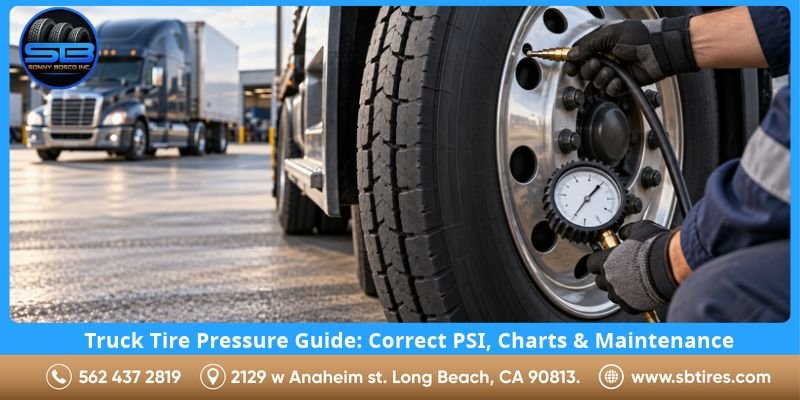
A truck brake inspection helps you catch worn linings, air leaks, and adjustment problems before they turn into a failed roadside check or a dangerous stop on the highway. For drivers and fleet operators, regular brake checks are one of the simplest ways to keep commercial trucks safe, compliant, and on schedule. In this guide, SONNY BOSCO walks you through what to check, how to inspect air and hydraulic systems step by step, and which DOT requirements apply.
What Is a Truck Brake Inspection?
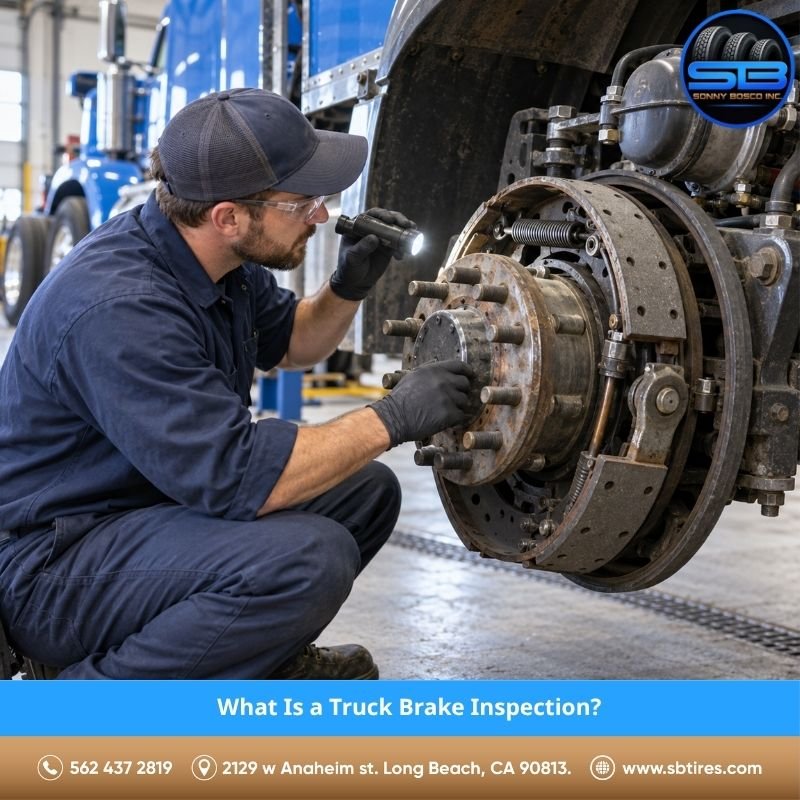
A truck brake inspection is a systematic check of every component that helps a commercial vehicle slow down and stop, done to confirm the system works as designed and meets federal safety standards. The scope depends on who performs it and why. Here is what it covers:
- Purpose: Find wear, leaks, misadjustment, and damage early, before they reduce stopping power or put the truck out of service.
- Components examined: Brake linings or pads, drums or rotors, air lines and hoses, brake chambers, slack adjusters, pushrods, parking brakes, warning devices, and ABS.
- Routine check vs. full inspection: A driver’s pre-trip check is mainly visual and functional. A comprehensive mechanical inspection adds measurements, teardown where needed, and comparison against regulatory limits.
- Value for fleets: Consistent inspections reduce unplanned downtime, lower repair costs, and support a clean safety record during roadside enforcement.
Truck Brake Inspection Checklist: What Should You Check?
A practical truck brake inspection checklist gives drivers, maintenance teams, and qualified brake inspectors a shared standard to work from. The table below summarizes the core items, followed by detailed notes for each component group.
| Component | What to Check | Warning Signs | Recommended Action |
| Linings and pads | Thickness, attachment, contamination | Thin material, cracks, oil soaking | Measure and replace per specs |
| Drums and rotors | Surface condition, cracks, dimensions | Heat checking, deep scoring, blue spots | Compare with manufacturer limits |
| Air lines and chambers | Leaks, chafing, mounting | Hissing, worn hoses, loose clamps | Repair before operation |
| Slack adjusters and pushrods | Applied stroke, adjuster function | Excessive travel, uneven stroke | Refer to a qualified technician |
| Pedal, parking brake, ABS | Response and warning lights | Soft pedal, pulling, ABS light on | Diagnose before dispatch |
How to Perform a Truck Brake Inspection Step by Step
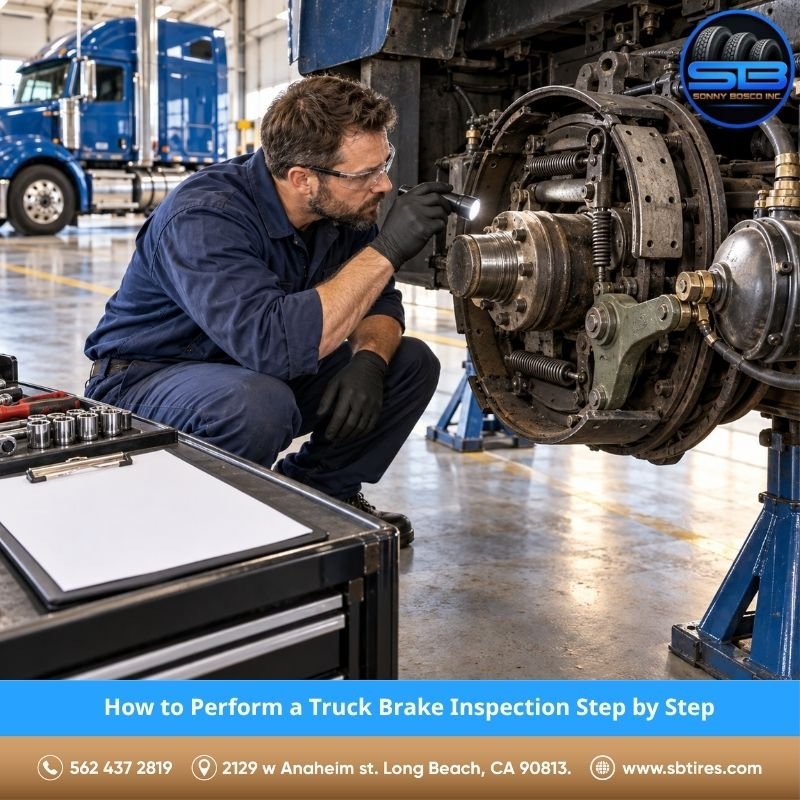
The sequence below shows how to inspect truck brakes in a logical order. Drivers can handle the visual and functional observations, while measurements and repairs should be left to trained personnel.
Step 1: Park the Truck and Prepare for Inspection
Safety comes before any brake work begins. Prepare the truck and work area as follows:
- Location: Choose a level, firm surface away from traffic.
- Securing the vehicle: Chock the wheels so the truck cannot move unexpectedly.
- Equipment: Have gloves, eye protection, a flashlight, and the correct measuring tools ready.
- Procedure: Follow the vehicle manufacturer’s safety instructions for the specific model.
Step 2: Check the Air Brake System
The air brake inspection confirms that the system can build, hold, and warn about pressure correctly. Check these items:
- Pressure buildup: Watch the gauges as the compressor fills the system and note the governor cut-out point.
- Reservoirs and lines: Inspect tanks, drain valves, and lines for damage and leaks.
- Audible leaks: Listen at chambers, fittings, and glad hands with the engine off.
- System behavior: Test the low air warning and leakage rate using the procedure for that specific vehicle.
Step 3: Inspect Brake Pads, Shoes, Drums, and Rotors
This step covers the foundation brake components at each wheel end. Work through these points:
- Visual check: Examine all friction components you can see through inspection ports or with the wheel removed.
- Measurement: Measure brake lining thickness where accessible and appropriate.
- Defects: Note cracks, contamination, loose linings, and excessive wear.
- Records: Write down any defect that needs further inspection, along with the wheel position.
Step 4: Inspect Slack Adjusters and Measure Pushrod Stroke
Pushrod stroke measurement requires the right conditions and a recognized method. Follow this order:
- Identify the chamber: Confirm the type, size, and stroke rating stamped or tagged on the chamber.
- Measure correctly: The federal periodic inspection standard calls for measuring with the engine off, reservoir pressure at 80 to 90 psi, and the brakes fully applied.
- Compare with limits: Check the applied stroke against the readjustment limit for that chamber.
- Refer findings: Send any out-of-limit result to a qualified brake inspector.
Step 5: Check Brake Performance and Warning Signs
The final step confirms the system works together as intended. Complete these checks:
- Brake response: Test service brakes at low speed in a safe, controlled area.
- Indicators: Confirm warning lights and the parking brake behave normally.
- Abnormal symptoms: Note any grinding, pulling, or vibration.
- Decision: Document all findings and decide whether the truck is safe to operate or needs repair first.
Air Brake vs. Hydraulic Brake Inspection: Key Differences
Most heavy-duty trucks use air brakes, while many medium-duty commercial trucks use hydraulic systems, and each needs a different inspection approach. The table below compares the main differences.
| Factor | Air Brake Inspection | Hydraulic Brake Inspection |
| Typical vehicles | Class 7 and 8 trucks, tractors, trailers | Class 3 to 6 trucks, vans, light trucks |
| Energy source | Compressed air | Brake fluid under pressure |
| Main leak check | Audible air leaks, pressure drop rate | Fluid level, wet spots, damp hoses |
| Key adjustment item | Slack adjusters and pushrod stroke | Pedal travel and self-adjusters |
| Warning system | Low air pressure warning | Brake warning light, fluid level sensor |
| Parking brake | Spring brakes in chambers | Mechanical or driveline parking brake |
DOT Brake Inspection Requirements for Commercial Trucks
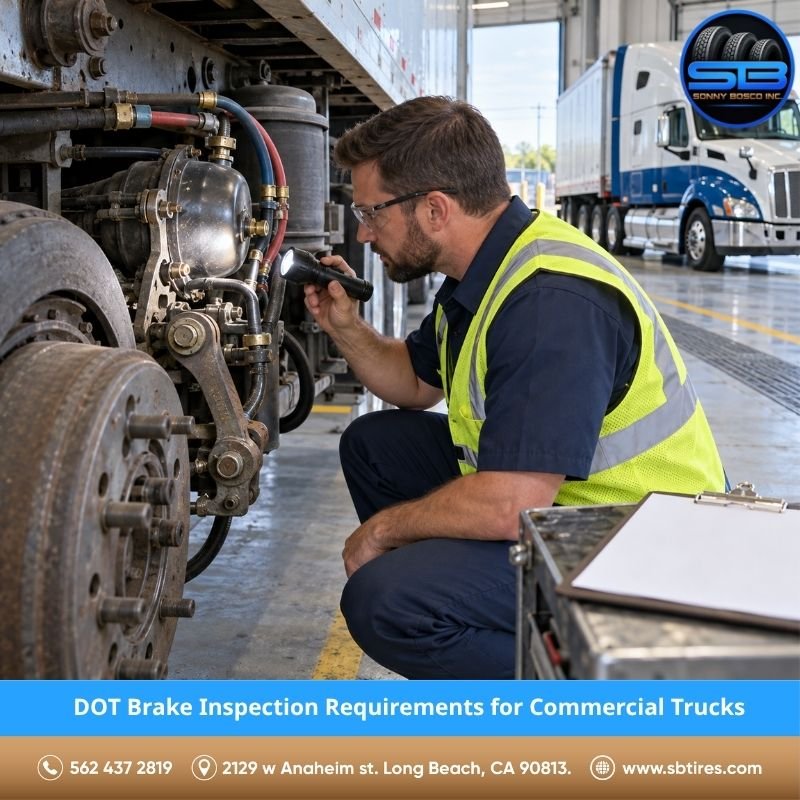
DOT brake inspection requirements cover three separate activities: driver inspections before and after trips, periodic inspections by qualified inspectors, and roadside enforcement checks that often follow CVSA out-of-service criteria. The sections below explain the federal rules behind each one.
FMCSA Brake Inspection Regulations
FMCSA brake inspection rules come mainly from two parts of the federal regulations. Here is how they divide responsibilities:
- 49 CFR Part 393: Sets the condition standards for brake components, including lining thickness, actuator readjustment limits, and drum or rotor limits.
- 49 CFR Part 396: Covers inspection, repair, maintenance, driver reports, and recordkeeping.
- Brake inspector qualifications (§396.25): Anyone inspecting or servicing brakes must understand the task, know the correct methods, tools, and equipment, and have either passed the CDL air brake test or completed a year of brake training, experience, or both.
- Shared responsibility: Drivers, motor carriers, and inspectors each have different duties, so a driver’s walkaround does not replace a qualified mechanical inspection.
Annual DOT Inspection Requirements
The annual inspection is the federal periodic check required for covered commercial vehicles. Keep these requirements in mind:
- Frequency: Under §396.17, each covered vehicle must receive a periodic inspection at least once every 12 months.
- Records: The motor carrier must keep a copy of the inspection report for fourteen months from the report date and make it available to officials on request.
- Proof on board: The vehicle should carry the report or an approved sticker or decal showing the most recent inspection.
- Ongoing checks: An annual inspection does not replace daily and scheduled brake checks.
Common Brake Defects That Can Lead to Inspection Failure
Many brake violations come from a short list of recurring defects. The most common include:
- Worn components: Linings, pads, drums, or rotors worn past applicable limits.
- Excessive pushrod stroke: Brakes out of adjustment beyond the chamber’s readjustment limit.
- Air leaks: Audible leaks at chambers, ruptured diaphragms, or damaged lines.
- Damaged parts: Missing, broken, loose, or contaminated components.
- Poor performance: A system that fails the applicable performance or safety standard.
Signs Your Truck Brakes Need Immediate Attention
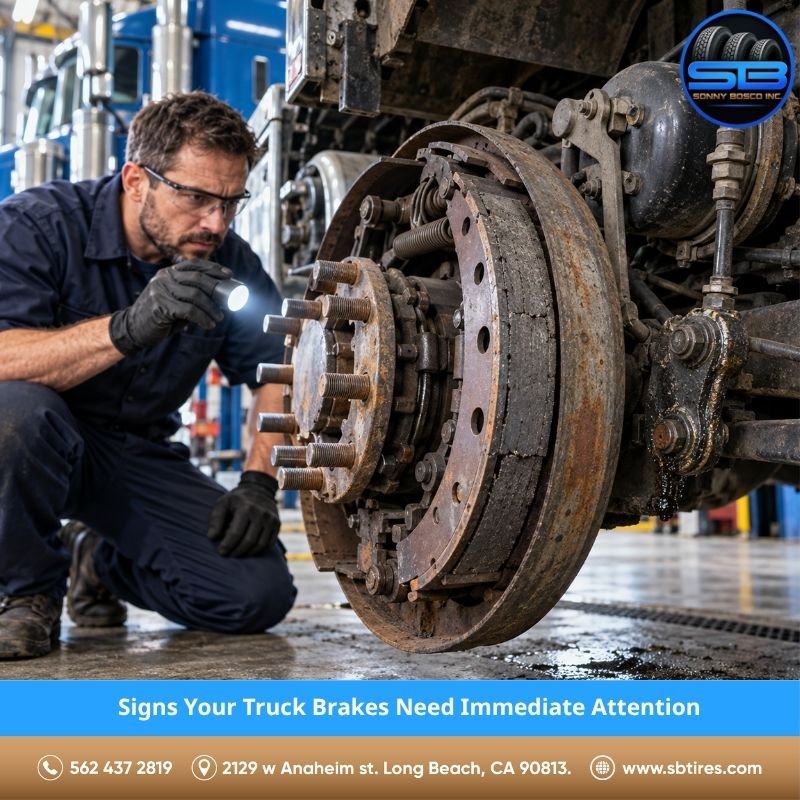
Some symptoms mean the braking system should be checked by a professional before the truck goes back on the road. Watch for these warning signs:
- Reduced braking performance: The truck takes longer than expected to stop.
- Air pressure loss: Pressure drops unexpectedly or air leaks are audible.
- Unusual noises: Grinding, squealing, or metal contact occurs during braking.
- Vehicle pulling: The truck pulls to one side when the brakes are applied.
- Brake warning lights: ABS or other brake indicators stay illuminated.
- Burning smell or excessive heat: A brake may be dragging or overheating.
How Often Should Truck Brakes Be Inspected?
Brake inspection frequency depends on how the vehicle is used, federal rules, manufacturer recommendations, and operating conditions. Most fleets combine three levels of inspection.
Daily Pre-Trip Brake Inspection
The daily check is the driver’s first line of defense against brake failure. It includes:
- Visual defects: Look for leaks, loose parts, and damaged hoses during the walkaround.
- Indicators: Watch gauges and warning lights during startup and the air brake test.
- Response: Note air leaks or unusual brake behavior in the yard.
- Reporting: Report any safety defect before the truck leaves.
Scheduled Preventive Brake Maintenance
Preventive maintenance catches gradual wear that a daily check cannot measure. A solid program covers:
- Service intervals: Follow the vehicle and component manufacturer’s recommended intervals.
- Operating conditions: Shorten intervals for heavy loads, mountain routes, and stop-and-go city work.
- Wear tracking: Measure friction components and record wear by wheel position.
- Documentation: Keep consistent records across the whole fleet.
Annual DOT Brake Inspection
The annual check confirms the vehicle meets federal minimum standards. Make sure you:
- Meet the requirement: Complete the periodic inspection at least every 12 months.
- Use qualified inspectors: Confirm inspectors meet federal qualification rules.
- Keep documentation: Store the report and keep proof of inspection with the vehicle.
- Act on findings: Schedule corrective maintenance as soon as defects are found.
Truck Brake Maintenance Tips for Fleet Operators
Good truck brake maintenance habits reduce avoidable failures and help fleets pass roadside inspections more consistently. Consider these practices:
- Consistent schedule: Stick to a preventive maintenance calendar for every unit.
- Wear monitoring: Track brake lining and pad wear to plan replacements before limits are reached.
- Regular air system checks: Inspect air lines, fittings, and brake chambers on a set schedule.
- Root cause analysis: Investigate recurring air leaks or uneven wear instead of repeating the same quick fix.
- Maintenance records: Log every inspection, repair, and replacement by vehicle and wheel position.
- Correct parts: Choose replacement heavy duty truck brake parts that match the vehicle’s specifications.
Find Heavy-Duty Truck Parts and Commercial Tires at SONNY BOSCO
Brakes and tires work together at every stop, so a safe truck depends on quality components at the wheel end. SONNY BOSCO supplies commercial truck tires and heavy-duty truck parts to transportation businesses, fleet operators, distributors, and parts buyers. Here is what you can expect:
- Commercial tire selection: Tires for steer, drive, and trailer positions on commercial trucks.
- Compatible parts: Support finding components, including commercial truck brake drums, that match your vehicle’s specifications.
- Fleet support: A supplier that understands the uptime pressure on fleets and transport businesses.
- Safety focus: Quality tires and replacement parts that support your broader commercial vehicle safety program.
For commercial truck tires and heavy-duty truck parts inquiries, contact SONNY BOSCO at Hotline: 562 437 2819, email Sbvnopt@gmail.com, or visit sbtires.com. Our location is 2129 W Anaheim St, Long Beach, CA 90813.
Frequently Asked Questions About Truck Brake Inspection
How often should truck brakes be inspected?
Drivers should check brakes before every trip, fleets should follow the manufacturer’s preventive maintenance schedule, and covered commercial vehicles need a federal periodic inspection at least once every 12 months.
What is included in a truck brake inspection?
It covers linings or pads, drums or rotors, air or hydraulic components, brake chambers, slack adjusters, warning devices, the parking brake, and overall braking performance.
What is the minimum brake lining thickness for a truck?
It depends on brake type and axle position. Under the federal periodic inspection standard, non-steering axle linings fail at under ¼ inch at the shoe center for air drum brakes, 1/16 inch or less for hydraulic and electric drum brakes, and under 1/8 inch for air disc brakes.
How do you check pushrod stroke on air brakes?
Mark the pushrod at the chamber with the brakes released, fully apply the brakes at the specified reservoir pressure with the engine off, then measure the distance the mark travels and compare it with the limit for that chamber type.
What causes a truck to fail a DOT brake inspection?
Common causes are excessive pushrod stroke, linings worn past limits, air leaks, cracked drums, and contaminated or missing components. The applicable inspection standard decides whether a defect is a failure.
Can a truck driver perform a brake inspection?
Drivers can and should perform pre-trip brake checks. Brake adjustment, measurement for compliance, and repairs must be handled by someone who meets federal brake inspector qualifications.
How much does a truck brake inspection cost?
Cost depends on truck type, inspection scope, location, labor rates, and whether repairs or replacement parts are needed. Contact a local shop for a quote based on your vehicle.
A regular truck brake inspection is one of the most effective ways to keep commercial trucks safe, compliant, and productive. Catching worn linings, air leaks, and adjustment problems early saves you from costly breakdowns, roadside violations, and preventable accidents. Combine daily driver checks, scheduled preventive maintenance, and the annual DOT inspection, and rely on qualified technicians for measurements and repairs. Follow SONNY BOSCO at sbtires.com for more practical guides on commercial truck tires, heavy-duty truck parts, and fleet maintenance.