Proper tire care helps prevent premature wear, improve safety and reduce operating costs. Following the best tire maintenance practices, including regular pressure checks, tread inspections and wheel alignment, can extend tire life and prevent unexpected breakdowns. In this guide, SONNY BOSCO shares 10 practical maintenance tips and a checklist to help drivers and fleet operators keep their tires in good condition.
Why Is Proper Tire Maintenance Important?
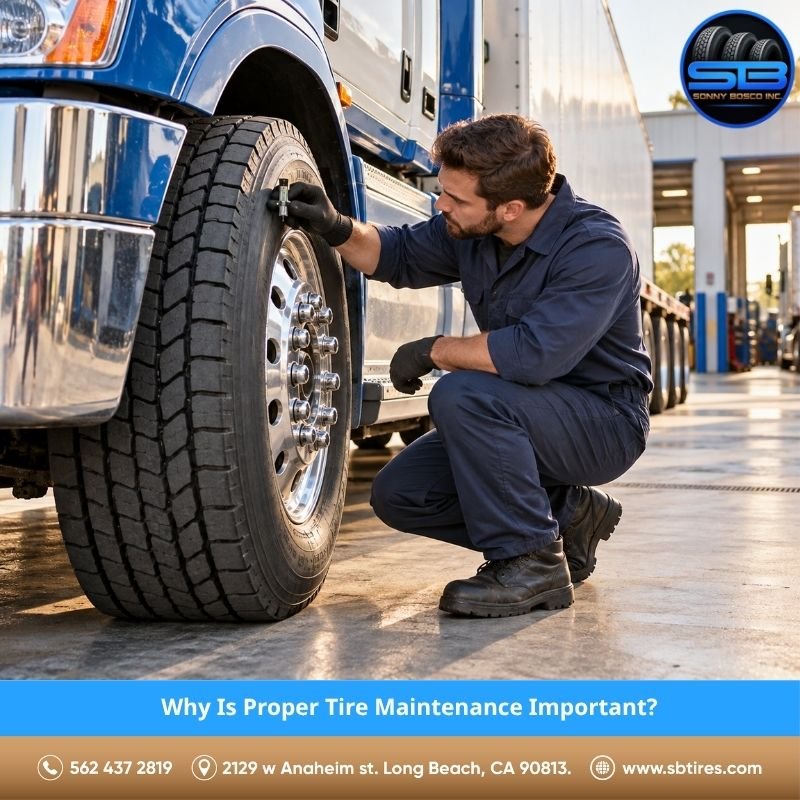
Proper tire maintenance helps commercial trucks operate safely and efficiently while reducing unnecessary replacement costs. Regular inspections also allow drivers and fleet managers to identify potential problems before they develop into more serious issues.
The main benefits of consistent tire care include:
- Better traction, braking and handling: Properly inflated tires with adequate tread help maintain road contact, allowing trucks to stop and steer more predictably, especially on wet pavement.
- Longer tire life: Identifying irregular wear early allows drivers and maintenance teams to address the underlying cause before the tire wears out prematurely.
- Fewer roadside breakdowns: Regular inspections help detect slow air leaks, embedded objects and visible tire damage before a failure occurs.
- Improved fuel efficiency: Underinflated tires increase rolling resistance, requiring the engine to use more fuel to move the same load.
- Lower tire cost per mile: Extending the usable life of each tire can reduce replacement expenses, emergency repairs and vehicle downtime.
10 Best Tire Maintenance Tips to Extend Tire Life
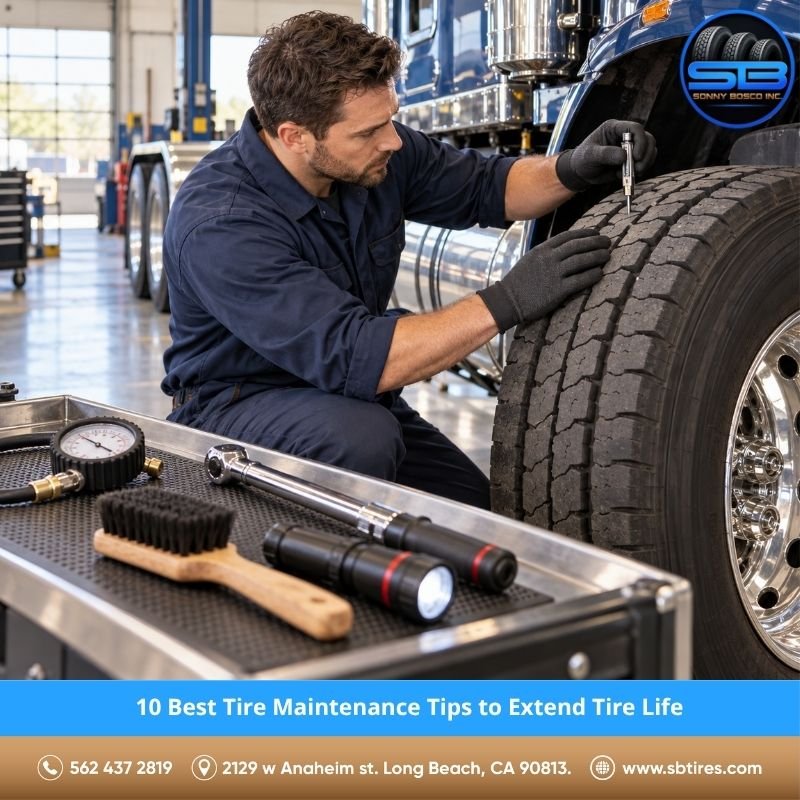
Maintaining commercial truck tires requires regular inspections and appropriate preventive care. The following 10 tire maintenance tips can help drivers and fleet managers identify problems early, prevent unnecessary tire wear and improve long-term performance.
1. Check Tire Pressure Regularly
Proper inflation pressure affects tire performance, tread wear and heat buildup. Tires operating at incorrect pressures may wear unevenly and experience greater stress during heavy-duty use.
Follow these steps to check tire pressure correctly:
- Use a calibrated pressure gauge: Visual inspections or striking a tire with a mallet cannot reliably determine inflation pressure. Use an appropriate gauge to obtain an accurate reading.
- Measure pressure when tires are cold: Check inflation before driving or after the truck has been parked long enough for the tires to cool. Driving generates heat and temporarily increases pressure readings.
- Follow load-inflation tables: For commercial trucks, determine the appropriate inflation pressure based on actual tire loads, axle configuration and the manufacturer’s load-inflation tables.
- Understand the risks of incorrect pressure: Underinflation increases tire flexing, heat buildup and the risk of premature wear. Excessive inflation relative to the operating load may contribute to center tread wear and greater susceptibility to impact damage.
2. Inspect Tire Tread Depth and Wear Patterns
Tread depth is an important indicator of tire condition, while wear patterns can reveal potential inflation, alignment or mechanical problems. Regular measurements help fleet operators identify tires that require further inspection or replacement.
Pay attention to the following:
- Use a tread depth gauge: Measure the depth of the major tread grooves, avoiding raised tread wear indicators or other areas that could affect the reading.
- Know the federal minimums: Under 49 CFR §393.75, tires on the front wheels of trucks and truck tractors must have at least 4/32 inch of tread depth in a major groove. Other tire positions generally require at least 2/32 inch.
- Identify unusual wear patterns: Center wear, shoulder wear, cupping and feathering may indicate issues involving inflation pressure, alignment or suspension components.
- Record measurements at multiple positions: Check the inner, center and outer portions of the tread to identify uneven wear before the problem becomes severe.
3. Rotate Tires When Recommended
Tire rotation can help manage uneven tread wear, but commercial truck tires require a different approach from passenger vehicle tires. Rotation decisions depend on tire design, axle position, operating conditions and manufacturer recommendations.
Consider the following factors:
- Manage uneven wear: Moving compatible tires between approved positions may help achieve more balanced wear and extend their usable life.
- Consider commercial truck requirements: Unlike passenger vehicles, commercial trucks do not follow one universal tire rotation interval.
- Respect axle applications: Steer, drive and trailer tires serve different purposes. Tires should only be moved to positions for which their specifications and condition are suitable.
- Follow manufacturer recommendations: Base rotation decisions on tire condition, wear patterns and the fleet maintenance program.
4. Check Wheel Alignment and Tire Balancing
Incorrect wheel alignment and tire imbalance can contribute to uneven tread wear, steering problems and uncomfortable driving conditions. Identifying these issues early may help prevent premature tire replacement.
Watch for the following warning signs:
- Uneven tread wear: Incorrect toe, camber or axle alignment can cause tires to wear unevenly as the truck moves.
- Steering problems: A truck pulling to one side or an off-center steering wheel may indicate an alignment issue.
- Unusual vibration: Steering wheel vibration or vibration at certain speeds may indicate tire imbalance, wheel problems or other mechanical defects.
- Recent impacts: Hitting a curb or deep pothole can affect wheel or suspension alignment and should prompt further inspection when symptoms appear.
5. Inspect Tire Sidewalls for Visible Damage
Tire sidewalls flex during operation and form an important part of the tire’s load-carrying structure. Damage to this area can compromise tire safety, particularly when commercial vehicles operate under heavy loads.
Check the following areas during tire inspections:
- Cuts, cracks and bulges: Look for visible damage that may indicate deterioration or structural problems.
- Embedded objects: Inspect the tread for nails, screws or other sharp objects. Have embedded objects professionally evaluated rather than removing potentially penetrating objects without assessing the tire.
- Inner sidewalls and dual tires: Examine accessible inner sidewalls and the space between dual tires for trapped debris or visible damage.
- Signs of structural failure: Bulges, exposed cords, tread separation and cuts that expose internal reinforcing materials require immediate attention.
6. Avoid Overloading Your Tires
Every commercial truck tire has a specified load-carrying capacity. Exceeding this limit places additional stress on the tire and can increase heat buildup, deformation and the risk of premature failure.
To prevent overloading:
- Check tire load ratings: Confirm that each tire has sufficient load capacity for its actual operating load and mounting configuration.
- Understand the effects of excess weight: Overloading increases tire deflection and heat buildup, potentially damaging internal tire components.
- Distribute cargo properly: Balanced loading helps prevent individual axles or tires from carrying excessive weight.
- Match inflation to the load: Use the tire manufacturer’s load-inflation tables to determine the appropriate cold inflation pressure for the operating load.
7. Maintain Safe Driving Habits
Driving behavior directly affects tire wear and overall tire performance. Aggressive braking, sudden acceleration and repeated impacts can shorten tire life, particularly on heavily loaded commercial vehicles.
Encourage drivers to follow these habits:
- Avoid sudden braking and hard acceleration: Aggressive driving increases tread wear and may cause flat spots when wheels lock during braking.
- Slow down on rough roads: Reducing speed over potholes, railroad crossings and damaged pavement helps limit impact damage.
- Avoid curb impacts: Rubbing against or striking curbs can damage tire sidewalls and wheels.
- Drive smoothly through turns: Avoid sharp cornering at excessive speeds, especially when operating loaded trucks and trailers.
8. Check Tire Valves, Wheels and Related Components
Tire performance also depends on the condition of valves, wheels and mounting components. Problems with these parts can cause air leaks or create additional safety risks.
Include the following items in your inspection:
- Valve stems, caps and extensions: Look for damaged valve stems, missing caps and signs of deterioration that could allow air to escape.
- Air leakage: Check for suspected leaks around valves and other accessible areas using appropriate leak-detection methods.
- Wheels and rims: Look for visible cracks, bent areas or other signs of damage.
- Mounting hardware: Check for missing fasteners, visible movement or rust streaks around wheel nuts that may indicate a problem.
9. Perform Tire Inspections Before Every Trip
A pre-trip tire inspection allows drivers to identify visible problems before operating a commercial vehicle. This step is particularly important for trucks traveling long distances or carrying heavy loads.
A basic pre-trip tire inspection should include:
- Overall tire condition: Look for visible damage, unusual tire appearance and other signs that require attention.
- Tread and sidewalls: Inspect accessible surfaces for cuts, bulges, abnormal wear and embedded objects.
- Dual tire assemblies: Check for debris trapped between dual tires and signs of improper spacing or damage.
- Defect reporting: Record any identified problems and arrange appropriate corrective action before departure.
10. Keep Tire Maintenance Records
Accurate maintenance records help fleet managers monitor tire performance, identify recurring problems and plan replacements more effectively. These records are especially valuable when managing multiple vehicles.
Track the following information:
- Tire pressure and tread depth: Record inspection measurements and dates to monitor changes over time.
- Tire position and mileage: Document where each tire is installed and how many miles it has traveled.
- Wear rates across vehicles: Compare tire performance between trucks and axle positions to identify unusual patterns.
- Repair and replacement history: Record maintenance work, tire removals and replacement dates to support future purchasing decisions.
Tire Maintenance Checklist and Recommended Schedule
A structured tire maintenance checklist helps drivers and fleet managers complete important inspections without overlooking essential tasks. The recommended schedule should reflect vehicle usage, operating conditions, applicable regulations and tire manufacturer guidance.
| Inspection Item | Recommended Frequency | What to Check |
| Visual tire inspection | Before each trip | Cuts, bulges, visible damage and abnormal wear |
| Tire pressure | During scheduled pressure checks and whenever a problem is suspected | Cold inflation pressure compared with approved specifications |
| Tread depth | During routine maintenance inspections | Tread depth across major grooves and uneven wear |
| Wheel alignment and balancing | When symptoms appear or during planned maintenance | Pulling, vibration and irregular tread wear |
| Tire rotation | When appropriate for tire type, axle position and condition | Wear patterns and manufacturer recommendations |
| Detailed fleet tire audit | According to the fleet maintenance program | Tire condition, inspection records and replacement needs |
How to Recognize Common Tire Wear Patterns
Tire wear patterns can provide useful clues about inflation pressure, wheel alignment, suspension condition and driving habits. Identifying these patterns early allows fleet maintenance teams to investigate potential causes before additional damage occurs.
The table below summarizes several common types of tire wear.
| Wear Pattern | Possible Cause | Recommended Action |
| Center wear | Excessive inflation relative to the operating load | Verify pressure using the manufacturer’s load-inflation tables |
| One-shoulder wear | Wheel alignment or suspension problems | Inspect alignment and related components |
| Both-shoulder wear | Underinflation or excessive loading | Check inflation pressure and actual tire loads |
| Cupping | Suspension wear, wheel imbalance or other mechanical issues | Inspect suspension and tire-wheel balance |
| Feathering | Incorrect toe alignment or related geometry issues | Check wheel alignment |
When Should You Repair or Replace Your Tires?
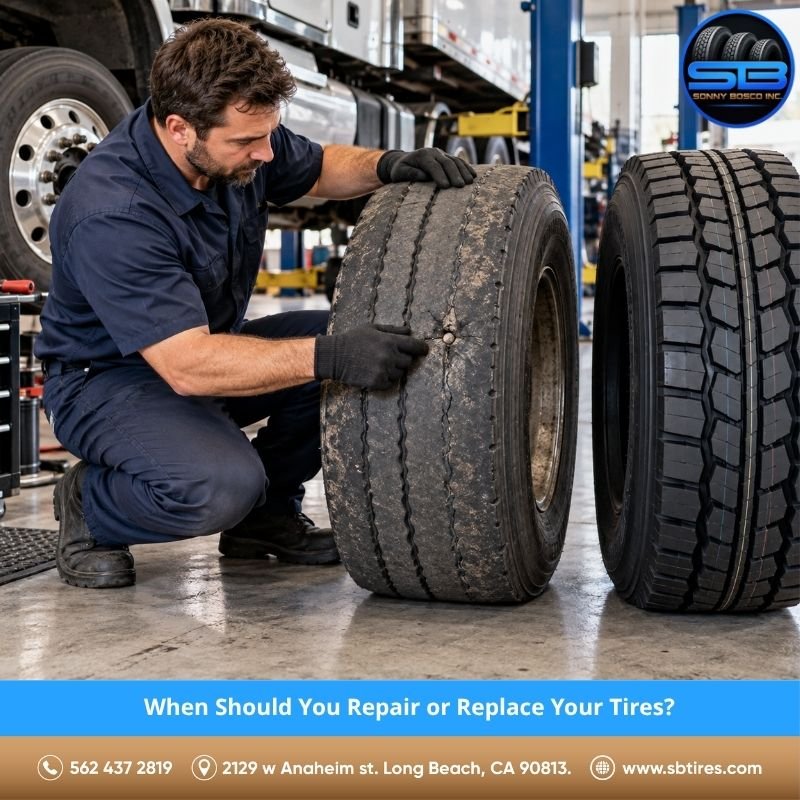
Tread depth is only one factor in determining whether a tire remains suitable for use. Structural damage, repeated air loss and other tire defects may require repair or replacement even when sufficient tread remains.
Watch for these warning signs:
- Tread below federal minimums: Under 49 CFR §393.75, tires on the front wheels of trucks and truck tractors require at least 4/32 inch of tread depth in a major groove. Other tire positions generally require at least 2/32 inch.
- Tires approaching replacement limits: Plan replacement before tread depth reaches the applicable minimum or the tire no longer meets safe operating requirements.
- Structural damage: Remove tires from service when they have exposed body ply or belt material, tread or sidewall separation, or cuts exposing internal reinforcement.
- Repeated air loss: Recurring pressure loss may result from punctures, damaged valves, bead leaks or wheel defects.
- Potentially repairable punctures: Some tread-area punctures may be repairable after a qualified technician removes the tire and performs a complete inspection.
- Professional evaluation: Tire repair eligibility depends on the type and location of the damage, the tire’s condition and the manufacturer’s repair requirements.
Best Tire Maintenance Practices for Commercial Truck Fleets
Commercial fleets operating under heavy loads, long distances and demanding schedules require a consistent preventive maintenance program. Standardized inspections and accurate records can help fleet managers reduce unexpected tire-related downtime and improve replacement planning.
The following practices are particularly important for fleet operations:
- Inspect tires by axle position: Steer, drive and trailer tires experience different loads and wear patterns. Establish suitable inspection and replacement criteria for each application.
- Assign clear responsibilities: Define which checks drivers must complete before trips and which tasks belong to maintenance technicians.
- Standardize inspection procedures: Use consistent checklists, measuring methods and reporting practices across the fleet.
- Establish defect reporting procedures: Make sure drivers can report tire problems promptly and understand when a vehicle requires further inspection.
- Track tire cost per mile: Divide the relevant tire costs, including purchases, repairs, retreading and maintenance labor, by the corresponding miles traveled.
- Review tire replacement history: Analyze premature tire removals and recurring problems to improve maintenance planning and purchasing decisions.
Common Tire Maintenance Mistakes to Avoid
Even when drivers perform regular inspections, certain maintenance habits can shorten tire life or allow problems to develop unnoticed.
Avoid these common mistakes:
- Checking pressure only when a tire looks flat: Commercial truck tires can be significantly underinflated without appearing visibly low.
- Using the sidewall maximum as the recommended operating pressure: The pressure marking on a tire does not replace the manufacturer’s load-inflation guidance for the actual operating load.
- Ignoring small air leaks: Minor leaks can develop into serious underinflation problems and may indicate damaged valves, beads or wheels.
- Overlooking irregular tread wear: Uneven wear may indicate alignment, suspension or inflation problems that could also affect replacement tires.
- Applying passenger vehicle rotation schedules: Commercial truck tires require rotation decisions based on tire specifications, axle positions and operating conditions.
- Operating tires with structural damage: Bulges, exposed cords and tread separation require immediate attention and may make a tire unsuitable for further use.
Commercial Truck Tire Solutions from SONNY BOSCO
Proper tire maintenance helps extend tire life, but commercial fleets also need reliable replacement tires to keep their vehicles operating efficiently. SONNY BOSCO supplies commercial truck tires and heavy-duty vehicle products for transportation businesses, fleet operators and tire distributors.
Customers can explore a range of tire products and supply options, including:
- Commercial Truck Tires: Tires suitable for different truck applications and operating conditions.
- DRC Tire Products: Radial and bias tires designed for commercial and heavy-duty applications.
- Tire Selection Support: Guidance on choosing suitable tire sizes, load capacities and tread designs.
- Wholesale Tire Supply: Tire sourcing options for transportation companies, fleet operators and distributors.
- Fleet Replacement Planning: Product availability information to support scheduled tire replacements and purchasing decisions.
- Product Inquiries: Contact SONNY BOSCO at 562-437-2819 or Sbvnopt@gmail.com for product information and wholesale inquiries.
For more information, visit SONNY BOSCO or contact the company at 2129 W Anaheim St, Long Beach, CA 90813.
Frequently Asked Questions About Tire Maintenance
How often should tire pressure be checked?
Commercial truck tire pressure should be checked regularly using a calibrated gauge and according to the fleet’s maintenance schedule. Drivers should also look for visibly low or damaged tires during pre-trip inspections. More frequent pressure checks may be necessary depending on operating conditions.
What is the best way to maintain truck tires?
The best way to maintain truck tires is to keep inflation pressure appropriate for the load, inspect tread depth and sidewalls regularly, address alignment problems early and maintain accurate service records. Consistent preventive maintenance helps reduce premature wear and tire-related breakdowns.
How often should commercial truck tires be rotated?
There is no universal rotation interval for commercial truck tires. Rotation depends on tread wear, tire type, axle position, operating conditions and manufacturer recommendations. Inspecting wear patterns regularly helps determine when repositioning compatible tires may be beneficial.
What tire tread depth is required for commercial trucks?
Under 49 CFR §393.75, tires on the front wheels of trucks and truck tractors must have at least 4/32 inch of tread depth in a major groove. Tires in other positions generally require at least 2/32 inch. Measurements must follow the conditions specified in the regulation.
Can improper tire pressure shorten tire life?
Yes. Underinflation increases tire flexing and heat buildup, which can lead to premature wear and structural damage. Excessive inflation relative to the operating load may also contribute to uneven tread wear and impact-related damage.
When should a commercial truck tire be replaced?
A commercial truck tire should be replaced when its condition no longer meets applicable safety requirements, when tread depth reaches the replacement threshold or when damage cannot be safely repaired. Fleet managers should plan replacements before tires reach legal or operational limits.
Best tire maintenance starts with proper inflation, regular tread inspections, early detection of damage and a consistent preventive maintenance schedule. Following these practices can help extend tire life, improve vehicle safety and reduce unnecessary operating costs. We hope these tire maintenance tips help you develop a practical inspection routine for your drivers and fleet. For more information about commercial truck tires and heavy-duty vehicle products, visit SONNY BOSCO.