


Is a worn brake drum still safe for another trip, or is it time to replace it? This truck drum guide helps fleet maintenance teams and parts buyers understand how brake drums work, how to interpret their size markings, how to inspect them for wear, and when replacement becomes necessary. During braking, truck brake drums absorb significant heat generated by friction, making their condition important for braking performance, safety, and fleet uptime. SONNY BOSCO has put together the following guide to help commercial truck operators make informed maintenance decisions.
What Is a Truck Brake Drum?
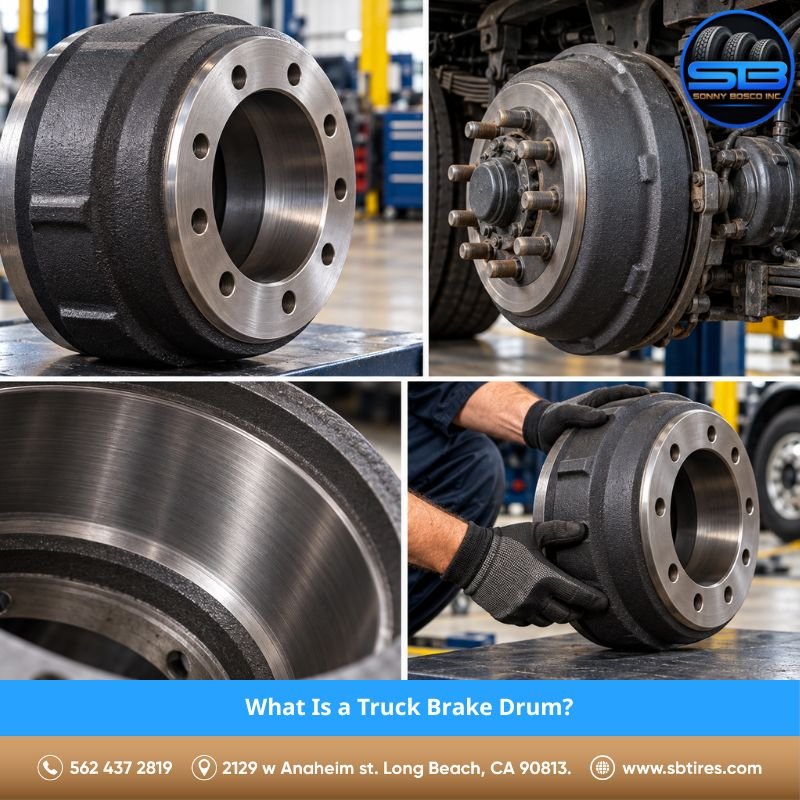
A truck brake drum is a heavy cast-iron component mounted to the wheel hub that provides the friction surface against which the brake shoes press when the brakes are applied. The key points are as follows:
- Location: Mounted at wheel ends equipped with drum brakes on steer, drive, or trailer axles.
- Material: Typically made from gray cast iron, with some designs using a steel shell and cast-iron friction surface.
- Related components: Works with brake shoes, linings, the S-cam, slack adjuster, brake chamber, and return springs.
- Air activation: Compressed air activates the brake chamber, moving the pushrod and rotating the slack adjuster and camshaft.
- Braking action: The S-cam pushes the brake shoes against the drum’s inner surface, creating friction that slows the wheel.
- Heat release: The drum absorbs heat generated during braking and dissipates it into the surrounding air.
Common Truck Brake Drum Sizes and Specifications
Many Class 8 trucks and trailers in the U.S. use brake drums with a nominal diameter of 16.5 inches. However, brake drum sizes vary depending on the axle, brake system, and vehicle application. The table below shows several commonly used sizes:
| Size (diameter × shoe width) | Common applications | Fitment notes |
| 16.5 × 7 in | Heavy-duty trucks and trailers | Verify the bolt pattern, pilot diameter, hub design, and mounting dimensions. |
| 16.5 × 6 in | Commercial truck axle applications | Confirm compatibility with the brake shoes, brake spider, and axle configuration. |
| 16.5 × 5 in | Selected heavy-duty truck applications | Check the axle model, mounting dimensions, and manufacturer specifications. |
| 16.5 × 8.625 in | Selected heavy-duty and severe-service applications | Verify brake assembly compatibility and the required braking capacity. |
| 15 × 4 in | Certain truck brake configurations | Confirm the original equipment part number and axle specifications. |
How to Identify the Correct Truck Brake Drum
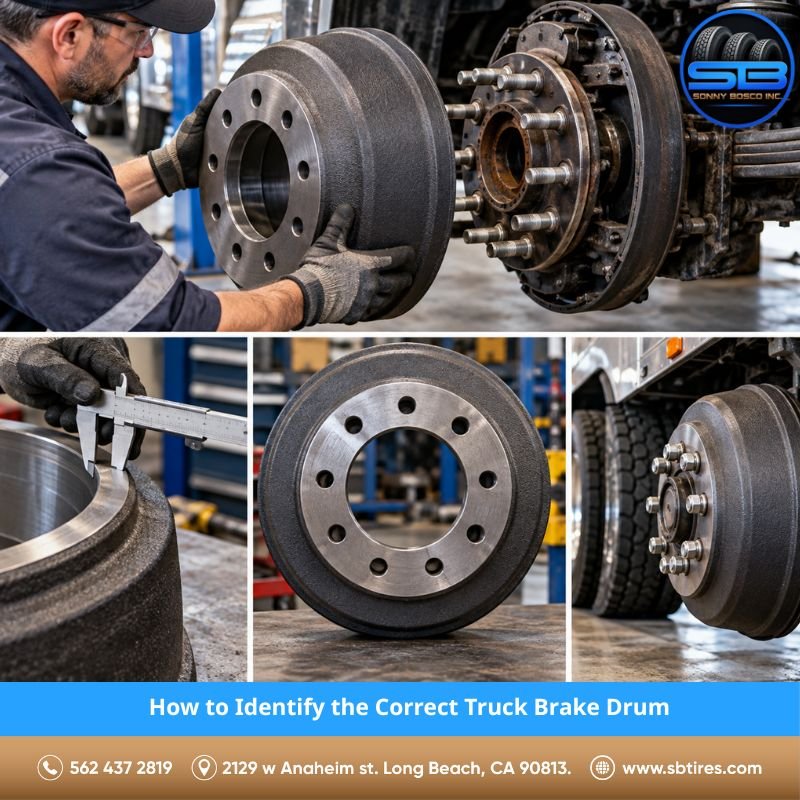
Ordering the wrong drum can lead to additional downtime and potential safety risks. Follow these steps to identify the correct replacement:
- Read the markings: Look for identification markings on the outer face, near the mounting flange, or along the drum barrel.
- Casting number vs. part number: The casting number identifies the drum casting, while the part number helps verify compatibility and order the correct replacement.
- Measure the drum: Use a brake drum gauge to measure the inside diameter at several points and check for out-of-roundness.
- Check mounting dimensions: Confirm brake shoe width, bolt pattern, pilot diameter, and mounting offset.
- Match the axle: Verify the axle model and hub assembly rather than relying only on the truck make or model.
- Cross-reference carefully: Use OEM catalogs or verified supplier information instead of unverified online lists.
Signs of Truck Brake Drum Wear and Damage
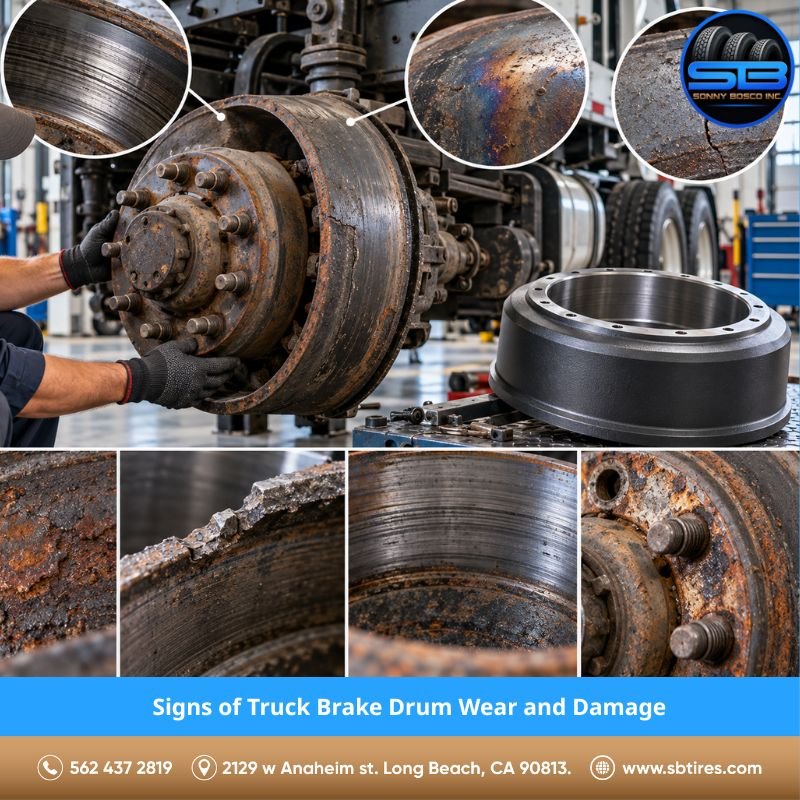
Brake drums wear gradually, so early warning signs may go unnoticed during routine operations. Watch for these common inspection findings:
- Heat checking: Fine, shallow cracks caused by repeated heating and cooling. Their acceptability depends on the manufacturer’s inspection criteria.
- Structural cracks: Cracks extending to the drum’s open edge or through its wall may indicate serious structural damage and require replacement.
- Scoring and grooves: Surface damage that may result from worn brake linings, exposed rivets, or contamination.
- Heat damage: Blue discoloration, localized hard spots, or other signs of overheating that may contribute to vibration and uneven braking.
- Driving symptoms: Grinding noises, vibration, increased stopping distances, or the vehicle pulling to one side during braking.
- Full inspection: These symptoms can have several causes, so a qualified technician should inspect the entire braking system.
Truck Brake Drum Wear Limits: When Should You Replace Them?
Normal brake drum wear is expected over time. However, drums that exceed their specified service limits or show significant damage must be replaced. Use the following checklist to assess drum condition, and always confirm the findings against the manufacturer’s inspection criteria.
| Inspection finding | Keep | Inspect further | Replace |
| Diameter within the service limit, smooth surface, and no visible damage | ✓* | — | — |
| Light surface heat checking | — | ✓ | — |
| Diameter approaching the maximum permitted service diameter | — | ✓ | — |
| Moderate scoring or uneven wear | — | ✓ | — |
| Blue discoloration or localized hard spots | — | ✓ | — |
| Diameter at or exceeding the maximum permitted service diameter | — | — | ✓ |
| Crack extending through the drum wall | — | — | ✓ |
| Severe heat damage, distortion, or a broken mounting flange | — | — | ✓ |
Can Truck Brake Drums Be Resurfaced or Should They Be Replaced?
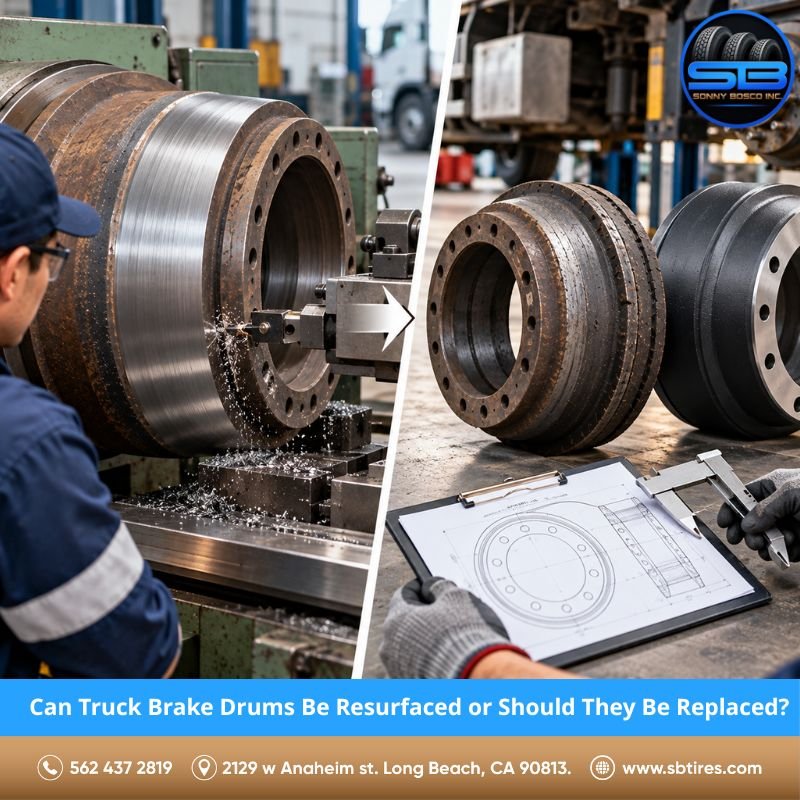
Resurfacing may restore the braking surface of certain worn drums, but not every truck brake drum is suitable for machining. The decision depends on the manufacturer’s recommendations, drum condition, and remaining material thickness. Consider the following factors:
- Manufacturer recommendations: Check whether resurfacing is permitted. Some manufacturers, including Bendix for certain heavy-duty air brake drums, advise against machining or reboring.
- Machining limit: If resurfacing is permitted, the finished diameter must remain within the manufacturer’s specified machining limit.
- Surface condition: Minor scoring or uneven wear may be repairable when the drum meets all applicable inspection requirements.
- Cracks and heat damage: Replace drums with structural cracks, severe heat damage, or other conditions that exceed manufacturer limits.
- Remaining material: Removing too much material reduces drum wall thickness and can affect heat absorption and structural performance.
- Replacement cost: Compare machining costs, remaining service life, and replacement expenses before deciding which option is more practical.
For fleet operators, replacing a damaged or excessively worn brake drum is generally the safer choice when resurfacing is not recommended or the drum cannot meet manufacturer specifications.
How to Replace a Truck Brake Drum Safely
Replacing a truck brake drum requires proper equipment, technical knowledge, and careful inspection of the braking system. The following steps provide a general overview of the replacement process. All work should be performed by qualified technicians following the vehicle and brake manufacturer’s service instructions.
- Step 1 – Prepare the vehicle: Park on a level surface, secure the vehicle against movement, and chock the wheels according to the service procedure.
- Step 2 – Support the vehicle safely: Use lifting equipment and jack stands rated for the vehicle’s weight. Never work beneath a vehicle supported only by a jack.
- Step 3 – Follow air brake safety procedures: Identify the brake system and follow the manufacturer’s instructions for safely handling air pressure, parking brakes, and spring brake assemblies.
- Step 4 – Remove and inspect components: Remove the wheel and brake drum according to the applicable service manual. Inspect the brake shoes, linings, S-cam, return springs, hub, and mounting surfaces for wear or damage.
- Step 5 – Install the replacement drum: Confirm the correct part number and mounting specifications. Install the drum and related components using the manufacturer’s tightening sequence and torque requirements.
- Step 6 – Check brake operation: Verify brake adjustment, pushrod stroke, and overall system function according to the manufacturer’s instructions before returning the vehicle to service.
Truck Drum Brakes vs. Disc Brakes: What’s the Difference?
Many newer commercial trucks are equipped with air disc brakes, while drum brakes remain common across trucks and trailers. Both systems have advantages and limitations depending on vehicle design, operating conditions, and maintenance requirements.
| Criteria | Drum brakes | Air disc brakes |
| Braking characteristics | Effective braking performance but may be more susceptible to fade during prolonged heavy braking. | Responsive braking with generally better resistance to fade under repeated heavy braking. |
| Maintenance | Often lower component costs, but some repairs require more labor. | Brake pads may be easier to access, although replacement components can cost more. |
| Heat management | Enclosed design may retain heat longer. | Exposed rotor generally dissipates heat more effectively. |
| Inspection | Friction surfaces are less accessible without removing components. | Pads and rotors are generally easier to inspect. |
| Typical applications | Common on trailers, drive axles, vocational trucks, and cost-conscious fleets. | Used on steer, drive, and trailer axles in various newer commercial vehicle configurations. |
Essential Truck Drum Guide for Fleet Maintenance
A preventive maintenance program helps fleet operators identify brake drum problems before they lead to unexpected downtime or roadside inspection violations. Include the following practices in your maintenance routine:
- Routine checks: Inspect brake drums during scheduled maintenance and whenever brake components are serviced.
- Heat patterns: Investigate wheel ends that operate at noticeably higher temperatures than others.
- Brake adjustment: Check brake adjustment and braking balance according to manufacturer specifications to maintain proper braking performance.
- Root causes: Address brake drag, contaminated linings, weak return springs, and air system problems before they cause additional damage.
- Maintenance records: Record brake drum part numbers, replacement dates, diameter measurements, and inspection findings.
- Fleet comparison: Review recurring defects across vehicles to identify possible maintenance, route-related, or driver-related patterns.
Commercial Truck Tires and Fleet Solutions at SONNY BOSCO
Brake drum inspections are important, but tire condition also plays a key role in commercial truck safety and performance. SONNY BOSCO supports trucking companies, individual truck owners, fleet operators, and parts buyers with:
- Commercial truck tires: Tire solutions for line-haul, regional, and vocational trucking applications.
- Fitment support: Assistance with tire selection based on vehicle specifications, load requirements, and operating conditions.
- Fleet-focused service: Supporting individual truck owners and fleet operators in choosing tires suited to their operational needs.
- Hotline: 562-437-2819.
- Email: Sbvnopt@gmail.com.
- Address: 2129 W Anaheim St., Long Beach, CA 90813.
Frequently Asked Questions About Truck Brake Drums
How Long Do Truck Brake Drums Last?
There is no fixed replacement mileage for truck brake drums. Their lifespan depends on vehicle load, driving conditions, braking frequency, maintenance practices, and drum design. Regular inspections are the most reliable way to determine whether a drum remains suitable for service.
How Much Does a Semi-Truck Brake Drum Weigh?
Brake drum weight varies depending on size, material, and design. Lightweight and conventional cast-iron drums can have significantly different weights, even when their nominal dimensions are the same. Check the manufacturer’s product specifications to confirm the exact weight before ordering.
Can You Replace Just One Brake Drum on an Axle?
Yes, replacing a single brake drum may be possible if the other drum remains within service limits and the manufacturer’s maintenance instructions permit it. However, both sides of the axle should be inspected for wear, damage, and braking balance before making a replacement decision.
Can a Cracked Truck Brake Drum Be Repaired?
A brake drum with structural cracks should not be welded or machined to restore its serviceability. Drums with cracks that meet the manufacturer’s rejection criteria must be replaced to maintain safe braking performance.
What Causes Truck Brake Drums to Overheat?
Common causes include dragging brakes, improper adjustment, overloading, prolonged downhill braking, and uneven braking performance between wheel ends. A qualified technician should identify and correct the underlying problem before returning the vehicle to service.
How Often Should Truck Brake Drums Be Inspected?
Drivers should perform the required daily vehicle and brake checks. More detailed brake drum inspections should be included in preventive maintenance services, brake repairs, and required periodic inspections. The appropriate inspection frequency depends on vehicle use, operating conditions, and manufacturer recommendations.
Are All 16.5 × 7 Brake Drums Interchangeable?
No. Brake drums with the same nominal dimensions may differ in pilot diameter, bolt pattern, mounting style, hub compatibility, and load rating. Always verify the correct part number and manufacturer specifications before purchasing a replacement.
Understanding the information in this truck drum guide can help fleet operators and parts buyers identify the correct brake drum, inspect its condition, understand wear limits, and recognize when replacement is necessary. Always follow manufacturer specifications and rely on qualified technicians for brake system inspections and repairs. Visit SONNY BOSCO for more information about commercial truck tires, parts, and fleet maintenance.


